Treatment Guide
Sofwave 3-month build window
Day 0 to Week 12 — what is actually happening in the dermis between leaving the clinic and seeing the consolidated lift.
The Sofwave SUPERB result is not a Day 0 result. It is a three-month dermal-collagen-remodelling build that begins with the synchronous-ultrasound-beam stimulus at the clinic chair and consolidates between Week 8 and Week 12 post-treatment, with the documented endpoint windows confirmed by Sofwave Medical pivotal-study data and the PubMed-indexed peer-reviewed dermatology journal histology read. This page walks the timeline week by week from the international-patient perspective for travel-fluent patients who fly home shortly after the protocol and want to read the build as it happens in the mirror. The honest version is that the visible lift builds gradually, peaks between Week 10 and Week 12, and consolidates through Month 6 with the remodelled collagen layer providing the lift's longevity. Patients expecting a Day 0 result will be disappointed; patients reading the timeline correctly will recognise the build pattern and trust the platform's mechanism. Wei Lin's editorial brief is to give the honest week-by-week read for the Myeongdong-area protocol and support realistic patient expectations through the build window. The clinical-pathway oversight follows the Korean Ministry of Food and Drug Safety platform-registration framework.
Day 0 — what you see leaving the Myeongdong clinic
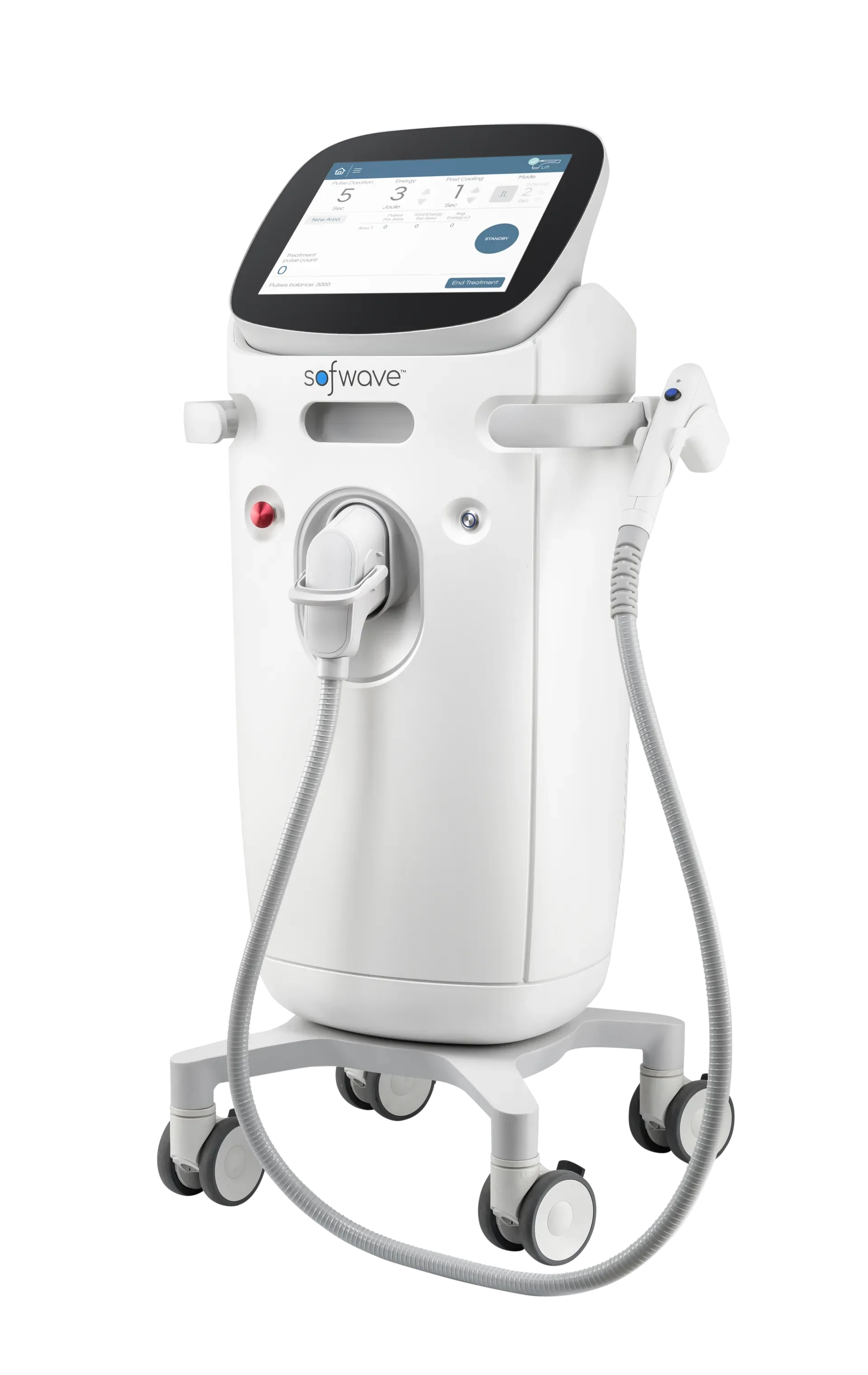
On the chair at the Myeongdong-cluster clinic, the topical anaesthesia is applied for 20 to 30 minutes, the Sofwave SUPERB synchronous-ultrasound-beam protocol is delivered in 30 to 45 minutes for face-and-neck coverage, and the patient walks out with a face that looks essentially like the face that walked in — with mild transient erythema in some patients, mild warmth in the treated zones, and occasionally a faint feeling of tightness in the lower-face and submental areas. The visible lift is not present on Day 0 and will not be present at Day 1 or Day 7. International patients flying home shortly after the protocol need to read this correctly: the device delivered the dermal-collagen stimulus, the stimulus is doing its work below the visible surface, and the eye-level read is not the indicator. The early-window read is the mirror feeling at Day 3 and Day 5 — many patients describe a faint glow, a marginally smoother surface, and a sense that the skin sits slightly more compactly on the underlying tissue. Patients should not expect anyone else to see a difference at Day 7. The first visible read for outside observers typically arrives between Week 3 and Week 5. The senior physician sets this expectation at consultation; clinics that promise Day 0 visible results should be treated as a marketing signal rather than a clinical signal.
Week 1 to Week 4 — early dermal response, surface-level glow
Between Week 1 and Week 4, the dermal response from the synchronous-ultrasound-beam stimulus moves through the early phases of the wound-healing cascade — fibroblast activation, early procollagen synthesis, and the initial structural changes in the dermal extracellular matrix. The visible read at the mirror during this window is subtle and gradual: a slight smoothing of the surface, a slight uniformity in skin tone, occasional patient reports of foundation sitting differently, and a faint sense that the lower-face zone feels marginally tighter at rest. Outside observers typically do not yet see the lift; the patient sees it first. Patients flying home during this window often message the Myeongdong clinic for reassurance — the build is happening but the eye-level read is still subtle — and the international-patient-fluent clinics respond with the timeline reminder rather than the platform-failure interpretation. The trial data supports the timeline, and patience through Weeks 1 to 4 is the cost of entry for the consolidated result. Skin-care during this window is normal-to-gentle: standard cleanser, standard moisturiser, daily broad-spectrum sunscreen, and the LDM-ultrasound aftercare protocol if the clinic prescribed it. Active ingredients like retinoids, AHAs, and BHAs can typically resume after Week 1, as covered in the aftercare guide. Patients should not attempt to accelerate the build with aggressive skincare; the dermal response is doing its work on its own timeline.
Week 4 to Week 8 — mid-build, visible smoothing accelerates
Between Week 4 and Week 8, the dermal-collagen-remodelling response accelerates into the mid-build phase. The procollagen synthesised in the early window cross-links into more mature collagen structures, the dermal scaffold reorganises, and the cumulative effect becomes visible at eye level. This is the window where outside observers — partners, colleagues, family — begin commenting that the patient looks rested, that the jawline reads slightly more defined, that the lower-face zone sits more compactly. The patient's mirror read during this window is often the most exciting part of the build: each week shows incremental improvement, the cumulative effect compounds, and the platform's mechanism feels validated. International patients who flew home immediately after the Myeongdong protocol often report at Week 6 that the photographic record from the clinic at Day 0 looks meaningfully different from the current mirror. Senior physicians at the Myeongdong-cluster clinics typically schedule the follow-up imaging at Month 3 because Week 8 to Week 12 is the consolidation window — the imaging captures the consolidated build rather than the still-developing build. Skincare during Week 4 to Week 8 returns to full routine: active ingredients, standard exfoliation cadence, and the sunscreen discipline that protects the new collagen from photodegradation. The build is now too visible for the patient to ignore; the lift is reading at eye level and the result that the trial endpoints support is consolidating in real time.
Week 8 to Week 12 — consolidation, peak visible lift
Between Week 8 and Week 12 — Month 2 to Month 3 — the dermal-collagen-remodelling response consolidates into the peak visible lift documented in the FDA 510(k) pivotal-study endpoint at three months. The mature collagen network is in place, the dermal scaffold has reorganised, and the lift the platform's mechanism predicts is now reading at eye level for both the patient and outside observers. The blinded photographic endpoint in the pivotal study was evaluated at this window because this is when the lift is most visible relative to baseline and when the platform's clinical claim is most easily verified. Patients in this window often report the most satisfaction — the cumulative build pays off, the photograph comparison with Day 0 reads dramatically, and the protocol's value calculation makes sense in retrospect. The Myeongdong-cluster clinic's Month 3 follow-up imaging appointment captures this peak, and patients on the higher-band protocols typically receive a side-by-side photographic record. The peak consolidates further through Month 6 as the collagen network matures, with the Month 6 endpoint in the trial data showing sustained or slightly increased lift relative to the Month 3 read. The skincare discipline through this window is the standard combination of active-ingredient routine and broad-spectrum sunscreen — the platform delivered the lift and the patient's job is to protect the new collagen from photodegradation.
Month 4 to Month 12 — longevity and the maintenance question
Beyond Month 3, the Sofwave SUPERB result enters the longevity phase. The remodelled dermal collagen provides the lift's structural foundation, and the natural ageing trajectory continues — the patient's face continues to age, but from a remodelled-collagen baseline rather than the pre-treatment baseline. Sofwave does not stop ageing; it shifts the baseline. The lift typically reads visibly for 12 to 18 months depending on underlying collagen quality, lifestyle factors (sunscreen discipline, smoking status, sleep, nutrition), and the depth of the original protocol. Patients on higher-band face-and-neck protocols typically read visible lift longer than patients on lower-band area-specific protocols. The maintenance question — annual return for a second Sofwave session — is patient-specific. Some patients return at Month 12; others wait to Month 18 or Month 24; some choose to combine the maintenance Sofwave with a different platform (Ultherapy PRIME, Thermage FLX, or regenerative bio-actives). The Myeongdong-cluster clinics typically offer a 10 to 15 percent maintenance discount on the second session for repeat international patients on a 12-month cadence, as covered in the pricing reference. The decision is clinical rather than commercial: the senior physician evaluates the maintained lift against the developing concerns and recommends the maintenance protocol that fits.
How the build window shapes the Korea-trip planning decision
For international patients planning the Korea trip around the Sofwave protocol, the three-month build window has practical implications. The honest read is that the trip itself is short — Myeongdong-area clinics operate on the half-day-protocol model and patients are free to continue the Korea itinerary the same evening. But the visible result is not present at the trip's conclusion. For patients with a Day 90 photographic moment in mind — a wedding, a milestone event, a planned photograph session — the protocol should be booked at least 12 weeks before the moment to allow the build to consolidate. For patients booking the protocol as part of a broader Korea aesthetic itinerary, the build window means the lift is still developing well after the trip ends, which is operationally elegant: the patient flies home with no downtime, the result builds at home, and the photographic comparison at Month 3 documents the build retroactively. The Myeongdong-cluster clinics handle the international-patient build-window communication through WhatsApp or the parent HEIM GLOBAL coordinator channel, with reassurance messages at Week 2, Week 4, Week 8, and Week 12 for patients who want the structured check-in. The platform's clinical fit is the foundation; the build window is the operational layer the patient should plan around. The Sofwave Myeongdong overview and the no-downtime profile extend the operational read further.
“The Sofwave result is not what you see leaving the clinic — it is what builds in the dermis between Day 0 and Week 12. Patients who read the timeline correctly trust the platform; patients reading the wrong indicator lose faith at Week 4.”
Wei Lin
Frequently asked questions
When is the visible Sofwave lift actually present?
The lift becomes visible to the patient between Week 3 and Week 5, accelerates through Week 4 to Week 8, and consolidates at peak visible lift between Week 8 and Week 12. Outside observers typically begin commenting between Week 5 and Week 8. The Day 0 read is essentially the pre-treatment face.
What is happening in the dermis between Day 0 and Week 12?
The synchronous-ultrasound-beam stimulus activates fibroblasts, triggers early procollagen synthesis through Weeks 1 to 4, drives mid-build dermal-collagen cross-linking through Weeks 4 to 8, and consolidates the mature collagen scaffold between Weeks 8 and 12. The histology evidence in PubMed-indexed peer-reviewed papers documents this remodelling cascade.
Why does the lift peak at Month 3 rather than immediately?
Because the lift is the result of dermal-collagen remodelling, not a Day 0 fluid or filler shift. The collagen-remodelling cascade takes 8 to 12 weeks to consolidate, which is why the FDA 510(k) pivotal-study primary endpoint was evaluated at Month 3 — that is when the platform's mechanism produces the documented lift.
What if I cannot see any change at Week 4?
Trust the timeline. The Week 4 read is subtle for most patients and the build accelerates between Week 4 and Week 8. International-patient-fluent Myeongdong clinics respond to Week 4 reassurance requests with the timeline reminder rather than the platform-failure interpretation. Patients who lose faith in the platform at Week 4 are reading the wrong indicator.
Does the lift continue to improve after Month 3?
Slightly — the Month 6 trial endpoint typically shows sustained or marginally refined lift relative to Month 3 as the collagen network matures. The peak visible lift is Month 3 and the consolidation continues through Month 6, after which the longevity phase begins.
How long does the visible lift typically last?
Twelve to eighteen months depending on patient-specific factors: underlying collagen quality, sunscreen discipline, smoking status, sleep, nutrition, and protocol depth. Higher-band face-and-neck protocols typically read visible lift longer than lower-band area-specific protocols. The platform does not stop ageing; it shifts the baseline.
If I have a Day 90 photographic moment, when should I book?
At least 12 weeks before the moment to allow the build to consolidate. Some patients book at 14 to 16 weeks ahead to allow margin. The pre-wedding and pre-photograph audience often books with this calendar discipline; the build window is the operational constraint patients should plan around.
Should I plan a Month 3 follow-up imaging trip back to Seoul?
Optional for most international patients. The Myeongdong-cluster clinics typically handle Month 3 imaging via patient-submitted photographs through WhatsApp or the parent HEIM GLOBAL coordinator channel; patients who happen to be back in Seoul can do an in-clinic imaging visit but most do not need to fly specifically for it. The Month 12 maintenance consultation is the more common return-trip trigger.