Treatment Guide
Sofwave in Myeongdong
Synchronous-ultrasound parallel-beam lifting in central Seoul — and why Myeongdong is the right district to do it from when you also came for the trip.
Sofwave is the newer entrant in the non-surgical lifting category, working at an intermediate dermal depth — between the dermal-volumetric heating of Thermage FLX and the SMAS-level coagulation of Ultherapy PRIME — using synchronous ultrasound parallel beams rather than the focused micro-coagulation points used by older MFU platforms. The Israeli-developed system received its initial United States FDA clearance in 2019, with subsequent indications added for cellulite improvement and short-term fine-line treatment, and the platform is registered in Korea through the Ministry of Food and Drug Safety. Myeongdong, the historic shopping-and-tourist district that sits between Seoul Station and Gyeongbokgung at the centre of the city, has emerged as a particularly practical district to receive Sofwave from — partly because of the cluster of dermatology and aesthetic-medicine clinics that serve the international-patient market here, partly because the district's airport-bus and AREX connectivity makes a flight-tight schedule realistic, and partly because Sofwave's near-zero downtime profile fits a trip where the patient is also walking to Bukchon at sunset on the same day. The reference here is for international patients planning a real Korea trip; clinical decisions belong with the treating physician.
How Sofwave actually works, and why the depth matters
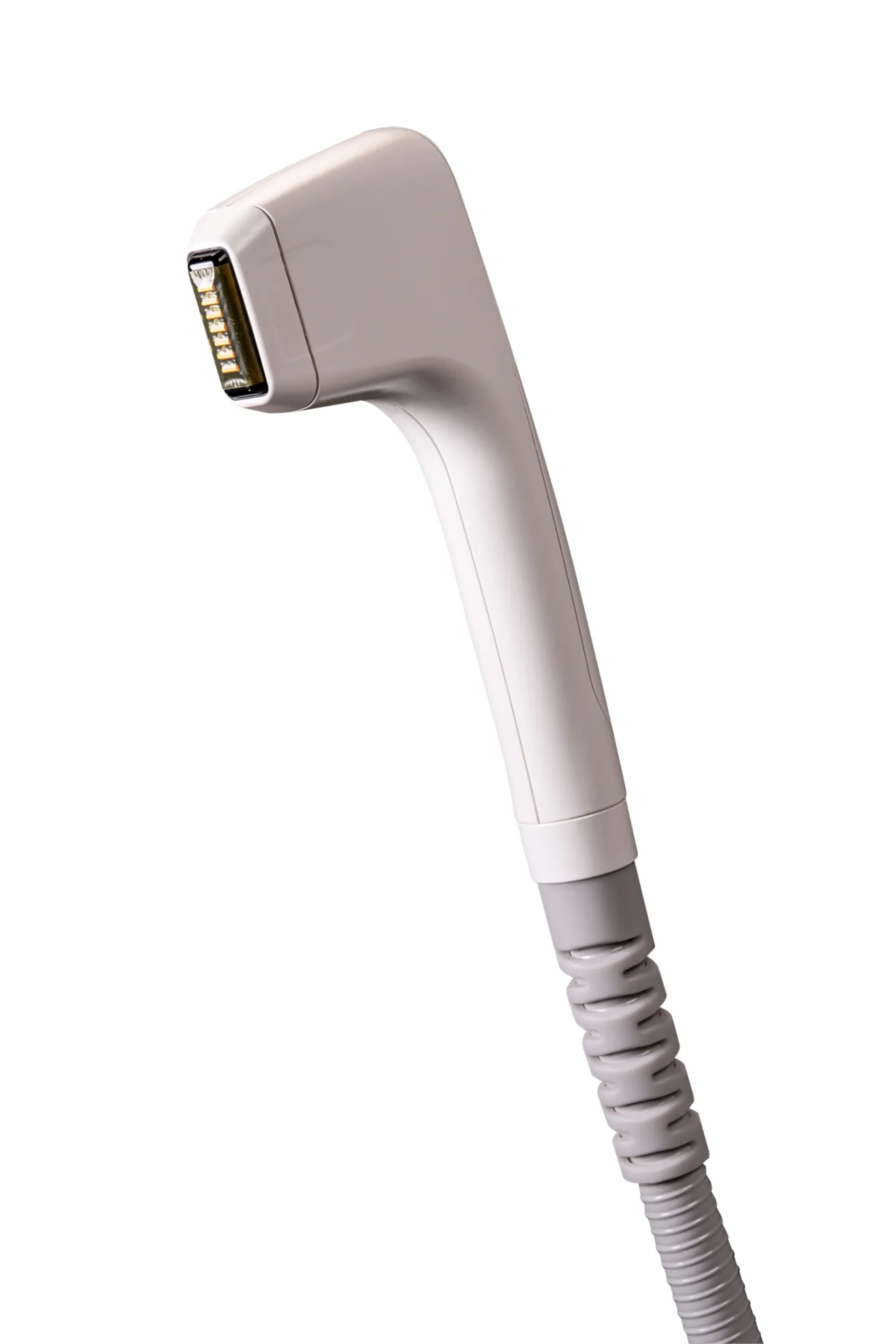
The Sofwave handpiece delivers seven parallel ultrasound beams simultaneously, each generating a controlled thermal-coagulation zone at approximately 1.5 millimetres depth — meaningfully deeper than typical fractional laser zones, meaningfully shallower than Ultherapy's SMAS-level 4.5 millimetre targets. The simultaneous-beam architecture is part of what makes Sofwave faster than the older sequential-shot focused-ultrasound platforms; a face-and-neck treatment is commonly delivered in 30 to 45 minutes versus the 60-to-90-minute typical Ultherapy PRIME session. The thermal coagulation zones at the upper-mid dermal level prompt collagen denaturation and remodelling over three to six months; the response reads as improved skin firmness, refined texture, and modest tightening of fine-line laxity. The mechanism is meaningfully different from Thermage FLX's volumetric monopolar-radiofrequency heating — Sofwave's coagulation zones are discrete and confined to the dermis, whereas Thermage's energy distributes through both dermis and subcutaneous fat. The Sofwave Medical authorised-provider list is the authoritative reference for verifying that a Korean clinic operates an authentic device; we cross-check this before publishing editorial coverage.
Why Myeongdong fits travel-light patients
Myeongdong's logistics are kinder to a four-day Korea trip than Gangnam's are. The district sits on Subway Line 4, two stops from Seoul Station and the AREX express to Incheon Airport (43 minutes direct on the express), with airport-limousine bus stops on Toegye-ro for the patients who prefer not to roll luggage on a transfer. International hotel inventory in the district runs from boutique to flagship — Lotte Hotel Seoul, the Westin Josun, L7 Myeongdong, Hotel 28 — and a Sofwave session at one of the Myeongdong-area clinics typically slots between hotel breakfast and a late-afternoon palace walk without forcing the patient to choose between the trip and the treatment. Compare this with Gangnam, where international patients often need a 30-to-45-minute taxi each way from the Myeongdong-cluster hotels and where the district's restaurant-and-shopping pull is more weighted to nightlife than daytime sightseeing. None of this is a clinical argument — the device is the device — but for the under-thirty cohort that does most pre-trip research on TikTok and Xiaohongshu, district logistics often determine where a treatment actually happens.
Where Sofwave sits in a Korean treatment programme
Korean clinics tend to deploy Sofwave in three patient profiles. The first is the early-laxity patient — typically in the late twenties through early forties — for whom Ultherapy PRIME is premature but Thermage FLX-only would underdeliver on the dermal-quality dimension. The second is the Ultherapy-uncomfortable patient — patients whose previous Ultherapy session was uncomfortable enough that they are reluctant to repeat it, where Sofwave's better tolerability profile reads as a reasonable substitute even with the depth trade-off. The third is the combination-protocol patient — patients receiving Sofwave for surface dermal work paired with Ultherapy PRIME or Thermage FLX on a separate visit for deeper structural or volumetric work. The combination approach is particularly common for international patients budgeting a comprehensive non-surgical programme over a single Seoul trip — the senior physician should determine which combination is appropriate, and protocols should be planned within a single clinic rather than splintered across multiple.
Tolerability, session structure, and what same-day flight tolerance actually looks like
Sofwave is meaningfully more tolerable than Ultherapy or Ultherapy PRIME and broadly comparable with Thermage FLX. Patients describe brief warm sensation at each beam-pulse, occasionally a fleeting sharp sensation at higher energy settings, but rarely the deep intense pulses characteristic of SMAS-depth focused ultrasound. Korean clinics typically apply topical anaesthesia for 20 to 30 minutes prior; oral analgesia is rarely necessary. The session itself is short: a face-and-neck protocol typically runs 30 to 45 minutes including beam-pattern mapping. Downtime is functionally zero in the practical sense — mild erythema for two to four hours, occasional transient warmth, no swelling pattern of consequence. There are no incisions, no general anaesthesia, no bandages. Patients commonly attend evening dinner reservations the same day, walk Insadong the morning after, and tolerate a flight home 24 hours post-treatment without modification. We hedge here because individual response varies — patients prone to easy flushing may pink up more visibly for an evening — but the same-day-flight-tolerance framing holds for the typical Sofwave session in a way it categorically does not for Ultherapy at higher energy. The lifting and tightening effect develops gradually over three to six months as collagen remodelling matures.
How the result reads, honestly
Sofwave's effect, at its best, reads as a refined and firmed dermal-quality presentation rather than a structural lift. Patients evaluating their own response should expect improved skin firmness, gradual reduction in fine-line laxity, and modest tightening at the upper-cheek and lower-face contour — not a visible elevation of structural anatomy. Patients with substantial jowl descent or significant SMAS-level laxity should not expect Sofwave to substitute for Ultherapy PRIME or surgical work; the platform is calibrated to a different clinical lane. Published studies suggest patient satisfaction with Sofwave correlates strongly with appropriate candidate selection: patients matched to the early-laxity-and-skin-quality profile read the result as worthwhile, while patients hoping for surgical-level transformation reliably do not. Photographic baseline documentation and three-month follow-up imaging is the only reliable way to evaluate one's own response. The result is, by design, undramatic — which is also why it photographs well on the Sunday-evening selfie three months later, and why the under-thirty cohort that prefers a non-obvious aesthetic tends to read it as a fair trade for the price.
Korean pricing context and where Myeongdong fits
Sofwave pricing in Korea typically ranges from KRW 1,200,000 to KRW 3,500,000 for a face protocol, with face-and-neck protocols at the higher end. Myeongdong-area clinics often sit at the mid-range of this band — somewhat below the Cheongdam premium tier in Gangnam, somewhat above the smallest neighbourhood practices, with positioning that reflects the district's international-patient orientation rather than aggressive volume discounting. The price difference across districts is largely a function of physician seniority, beam-pulse count, and clinic positioning rather than platform authenticity — all authorised Sofwave providers operate the same Sofwave Medical device. International patients can usually consult and treat in a single trip; consultation in the morning, treatment same-day or next-day, is the common structure for patients arriving from Singapore, Kuala Lumpur, Hong Kong, Taipei, or Tokyo. We cover the multi-currency conversions, package structures, and what to ask before booking in the Myeongdong pricing reference.
“Sofwave in Myeongdong is for the patient who came to Korea for the trip and figured they may as well book a session while they are there — the device is calibrated for it.”
Wei Lin
Frequently asked questions
What makes Myeongdong a good district for Sofwave specifically?
Subway and airport-bus access for travel-light schedules, an international hotel cluster within walking distance of the clinic district, and the practical fact that a near-zero-downtime treatment fits a trip where the patient is also walking palace grounds the same afternoon. None of this is clinical — the device is the device — but the logistics tilt the under-thirty cohort towards Myeongdong over Gangnam for short trips.
How does Sofwave compare with Ultherapy PRIME on a tourist trip?
Sofwave is faster (30 to 45 minutes versus 60 to 90), better tolerated, and tolerates a same-day evening dinner and a 24-hour flight window without modification. Ultherapy PRIME generates more SMAS-level structural lift but at higher discomfort and longer recovery. Patients with early-stage laxity who also want to enjoy their Korea trip tend to read Sofwave as the better-fit option.
Who is Sofwave best suited to?
Patients in their late twenties through early forties with early-stage laxity and skin-quality concerns; patients who found Ultherapy uncomfortable and want a tolerable alternative even with the depth trade-off; and combination-protocol patients receiving Sofwave for dermal work paired with deeper modalities on a separate visit. Patients seeking surgical-level transformation are not the right candidates.
Is Sofwave painful?
Considerably less so than Ultherapy or Ultherapy PRIME. Most patients describe brief warm sensation at each beam-pulse with occasional fleeting sharp sensation at higher energy. Topical anaesthesia for 20 to 30 minutes prior is standard; oral analgesia is rarely needed. We hedge for individual variation, but the comfort gap relative to focused-ultrasound alternatives is significant.
How long does the Sofwave result last?
The dermal-quality and tightening response develops over three to six months and persists for twelve to eighteen months in most patients. Annual maintenance treatment is typical for patients building Sofwave into a longer-term programme. Lifestyle factors — sun exposure, sleep, hydration, broader skincare consistency — affect duration meaningfully.
Can Sofwave be combined with regenerative work on the same Seoul trip?
Yes, and it commonly is. Korean clinics typically deliver Sofwave first, with regenerative bio-active work — exosome or growth-factor boosters — timed 48 to 72 hours later in the same trip. The combination is particularly well-suited to international patients budgeting a five-to-seven-day Seoul visit. The senior physician should determine the protocol order and dose; do not split protocols across multiple clinics.
How do I verify a Myeongdong clinic operates an authentic Sofwave?
The Sofwave Medical authorised-provider list at sofwave.com publishes the global directory. We cross-check clinic claims against the manufacturer list before publishing editorial coverage; readers can independently verify before booking. Korean Ministry of Food and Drug Safety platform registration is the secondary check.
What does HEIM GLOBAL do, and how is it relevant?
HEIM GLOBAL is the publisher of this archive — a KHIDI-registered medical-tourism facilitator (A-2026-04-02-06873) operating under the Ministry of Health and Welfare foreign-patient framework. The archive's editorial coverage is independent of HEIM GLOBAL's commercial relationships with individual clinics. Where commercial relationships exist, they are disclosed and outbound links carry rel="sponsored noopener".