Treatment Guide
Sofwave's no-downtime profile
What same-day flight tolerance actually looks like — and where the comparative platforms fall on the recovery spectrum.
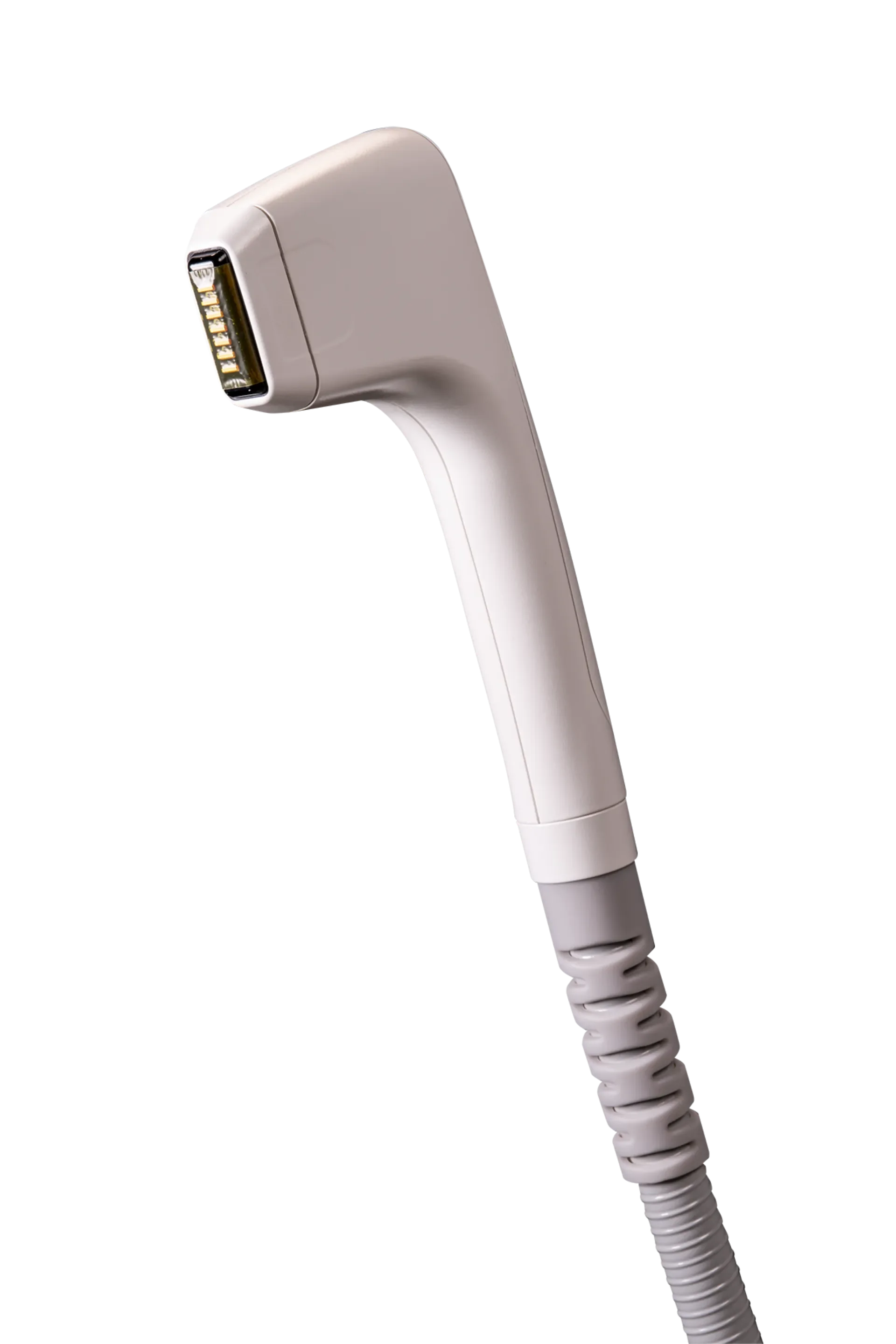
Sofwave is, in the practical sense, the non-surgical lifting platform with the smallest downtime footprint among the major Korean-deployed devices — meaningfully shorter than Ultherapy PRIME at standard energy, comparable with Thermage FLX, and inside the recovery envelope of regenerative bio-active boosters like exosome or growth-factor injections. For travel-conscious international patients flying in for a four-to-five-day Korea trip, the recovery profile often determines which platform actually gets booked. We use phrases like patients report and may help and in the typical case throughout this guide because individual response varies and hedging is honest; the aggregate pattern, however, is robust enough that Sofwave's same-day flight tolerance has become one of the platform's primary positioning signals among Singapore, Hong Kong, Taipei, and Tokyo readers researching Korean treatments. The clinical literature supporting Sofwave's tolerability profile is published in Lasers in Surgery and Medicine and the Journal of Cosmetic Dermatology, and the manufacturer's clinical-evidence summary is on the Sofwave Medical site. This is general orientation rather than clinical recommendation; clinical decisions belong with the treating physician.
What no downtime actually means in clinical use
No downtime is a marketing phrase that translates, in practical clinical use, to a few concrete things. It means no incisions, no general anaesthesia, no bandages, and no period of restricted physical activity beyond a 24-hour window of avoiding active heat exposure (sauna, hot yoga, intense sun). It does not mean zero visible response — patients can pink up for two to four hours post-treatment, occasionally have transient warmth or mild tenderness on touch, and rarely develop small areas of more pronounced erythema that persist into the evening. The Sofwave profile sits at the kind end of this spectrum: the typical session leaves the patient with mild flush that resolves before dinner, and the next-morning appearance is generally indistinguishable from baseline for the average reader. We hedge for individual variation — patients prone to easy flushing, patients with reactive skin, patients receiving combined treatments will all sit somewhere different on this distribution — but the central tendency holds. Compare this with Ultherapy PRIME at standard energy, where mild swelling that resolves over 24 to 48 hours is the typical pattern, or with deeper RF-microneedling at aggressive depth, where 48-to-72-hour pinpoint erythema is normal.
Same-day evening tolerance — what fits, what does not
After a Sofwave session at a Myeongdong clinic, the typical evening looks like this: the patient leaves the clinic 45 to 60 minutes after the appointment start, has mild facial warmth that fades within two to four hours, and is functionally appropriate for a Myeongdong street-food walk or a hotel-restaurant dinner reservation by 6 or 7 PM. Photography on this evening is reasonable for the patient comfortable with mild flush in the picture; for patients planning a wedding-photo or event-day shoot, we suggest a 48-hour buffer, not because the result is incompatible but because the photo standard is higher than the social standard. What fits less well: hot showers within the first six hours, a sauna or jjimjilbang trip the same evening, and aggressive sun exposure on a clear-sky day without SPF 50+ broad-spectrum protection. The Myeongdong-specific note is that the district's evening rhythm — a slow palace walk to Deoksugung at sunset, a stop at a serif-windowed cafe in Bukchon, dinner at one of the heritage-restaurant blocks near Cheonggyecheon — is, in the typical case, perfectly compatible with a same-day Sofwave session. Patients whose trip planning includes a sauna evening should book that for night two, not night one.
24-hour flight window — when it works, when to add a buffer
A 24-hour flight window after Sofwave is, for the typical patient, comfortable. The pressurised-cabin environment is dry but not punishing; airline meal service is unaffected; sleep on the flight is not impaired. Patients with reactive skin or those who tend to dehydrate visibly on long flights may notice their face reads slightly tighter than baseline for the first four to six hours of cabin time, which is a Sofwave-and-cabin combined effect rather than a recovery problem in the clinical sense. Where we suggest adding a buffer to 36 or 48 hours: combined-treatment trips where the Sofwave session is paired with same-week Ultherapy PRIME or aggressive RF-microneedling work; patients with a history of pronounced erythema responses; patients who have an event or photo shoot at the home-port destination and need the result to read clean. The Myeongdong-to-Incheon transfer time is 43 minutes via AREX express or 60-to-75 minutes via airport-limousine bus, both of which fit comfortably inside a same-afternoon flight schedule for a morning-treatment patient. A typical sequence for a Singapore-resident patient is morning consultation, morning or early-afternoon treatment, evening hotel rest, next-day light tourism, return flight night two.
Sofwave vs Ultherapy PRIME — downtime spectrum comparison
Ultherapy PRIME at standard energy generates a more pronounced post-treatment response than Sofwave: the typical pattern is mild to moderate facial swelling that peaks at 24 to 36 hours, resolves by 48 to 72 hours, and is occasionally accompanied by small areas of more localised tenderness at higher-energy zones. Patients describing their Ultherapy PRIME recovery often note that the swelling is not painful but is visually noticeable enough that they would not photograph the next day. By contrast, Sofwave's typical post-treatment response is mild flush resolving in hours rather than days, with no swelling pattern of practical consequence. The clinical trade-off is that Ultherapy PRIME generates more SMAS-level structural lifting; for patients with established laxity beyond Sofwave's intermediate-depth lane, the deeper platform's stronger result is the right trade against the longer recovery. For early-laxity patients, the recovery delta tilts the calculus toward Sofwave, and the same-day flight tolerance is one of the reasons. We do not stage a winner across these platforms — they address related but distinct clinical lanes — but on the recovery axis specifically, Sofwave is the kinder option. The Ultherapy PRIME archive covers that platform in parallel format.
Sofwave vs Thermage FLX — downtime profiles compared honestly
Thermage FLX uses volumetric monopolar radiofrequency heating distributed through dermis and subcutaneous fat, which produces a different post-treatment pattern than Sofwave's discrete dermal coagulation zones. The typical Thermage FLX recovery is mild diffuse warmth that lasts longer in the immediate post-treatment hours than Sofwave's brief flush, with no swelling pattern of practical consequence and a 24-hour flight tolerance that is comparable. For most patients the Sofwave and Thermage FLX downtime profiles are practically equivalent — both fit a same-day evening dinner, both tolerate next-morning sightseeing, both clear a 24-hour flight window without modification. The clinical differences are in the lane each platform addresses: Sofwave is calibrated for dermal-quality and fine-line work at the upper-mid dermis; Thermage FLX is calibrated for volumetric tightening across the dermis-and-fat envelope, with somewhat better outcomes on the body and the lower face contour for patients with mild fat-pad laxity. Many Korean clinics offer both platforms and will discuss the candidacy fit in consultation; Wei Lin's editorial position is that both are reasonable for travel-light patients on the recovery axis, and the choice should be made on the clinical lane rather than the recovery delta.
What you can and cannot do same-day, by hour
Hour zero to two: leave the clinic, walk back to the hotel, hydrate generously, avoid hot showers and direct sun. Hour two to four: mild flush typically resolving; gentle application of bland moisturiser is fine; cosmetic camouflage if the patient prefers, though usually unnecessary. Hour four to eight: dinner reservations, evening walks, gentle social events; photography is reasonable for the patient comfortable with mild flush in the image. Hour eight to 24: light evening, normal sleep, no sauna or hot bath, no aggressive exfoliation, no aspirin or other heat-promoting NSAIDs unless previously prescribed. Hour 24 to 72: full activity resumption including light exercise; saunas and jjimjilbangs are reasonable from hour 48 for the comfortable patient; sun exposure with SPF 50+ broad-spectrum is fine. Hour 72 onward: standard skincare protocol, no ongoing restrictions. The collagen-remodelling response builds over weeks; the activity restrictions are early-window only. Patients combining Sofwave with regenerative bio-actives or other modalities should follow the more conservative aftercare protocol of the two.
“Sofwave's downtime profile is the practical reason it fits a tourist trip — not the only reason to pick it, but often the deciding one for patients whose Korea week also includes a palace walk and a flight home.”
Wei Lin
Frequently asked questions
Can I really fly the day after a Sofwave session?
For the typical patient, yes — comfortably. The pressurised-cabin environment is dry but not punishing for a healed dermal-coagulation pattern that is already resolving by hour 24. We add a buffer to 36 or 48 hours for combined-treatment trips, reactive-skin patients, or photo-shoot-at-destination scenarios. The Myeongdong-to-Incheon transfer fits comfortably inside a same-afternoon flight schedule.
How does Sofwave downtime compare with Ultherapy PRIME?
Sofwave is meaningfully kinder. Ultherapy PRIME at standard energy generates 24-to-72-hour mild-to-moderate facial swelling, where Sofwave's typical post-treatment response is hours of mild flush. Ultherapy PRIME makes up for the longer recovery with stronger SMAS-level structural lift; for patients prioritising downtime, Sofwave wins on that axis specifically.
Can I do a Bukchon palace walk the same evening?
Yes. The typical post-Sofwave session leaves the patient functionally appropriate for evening sightseeing within two to four hours. We suggest sun-protective layers if the walk is in late-afternoon sun and a generous SPF 50+ application. Hot showers and saunas are the only same-day activities to avoid.
Is there any visible mark or bruising after Sofwave?
Rarely. The typical post-treatment appearance is mild diffuse flush, not pinpoint marks or bruising. Small areas of more pronounced erythema at higher-energy zones are uncommon and resolve within hours. Bruising as a category is more associated with injectables than with Sofwave's coagulation-zone mechanism.
What if I have a wedding or major photo shoot at home — how much buffer should I add?
Forty-eight to 72 hours is conservative and reasonable. Not because the result is incompatible with photography sooner — it usually is — but because the photo standard is higher than the social-evening standard and a buffer absorbs individual-variation risk. Patients with reactive skin or a history of prolonged erythema may prefer a full week.
Can I exercise the same day?
Light walking, yes; intense cardio or hot-yoga, no. The reasoning is heat exposure, not the activity itself — the same-day window is about avoiding active dilation of the post-coagulation tissue. Standard exercise resumes from hour 24 to 48 in the typical case. Patients with reactive skin should add a buffer.
How does Sofwave compare with regenerative-medicine recovery on the same trip?
Sofwave and regenerative bio-active boosters (exosome, growth-factor) have similar near-zero downtime profiles. The combination is common on Korean trips: Sofwave first, regenerative work 48 to 72 hours later. Both fit the same-day evening dinner and 24-hour flight tolerance pattern in the typical case. The senior physician should determine the protocol order.
What if my downtime is worse than the typical pattern?
Individual response varies. Patients with reactive skin, recent active acne, or recent aggressive skincare may have a longer flush window. The clinic should discuss this in consultation and may modify energy settings or protocol depth. Persistent erythema beyond 24 hours warrants a check-in with the treating physician; the platform itself does not have a meaningful prolonged-recovery footprint in the typical case.