Treatment Guide
Sofwave pre-wedding timing
The three-month build window — why the photo-ready result arrives at week twelve, not week four, and what that means for the trip you book this quarter.
The pre-wedding planning timeline for a Sofwave session is, in our reading, almost always misjudged by four to eight weeks on the early side. Patients book the session at the four-week-out mark hoping for a dramatic peak-result on the wedding day, when the clinical-build window for Sofwave's dermal-collagen-coagulation mechanism actually peaks at week eight to twelve and continues to refine through week sixteen. The right pre-wedding booking sits in the eight-to-fourteen-week window from the ceremony date — far enough that the build curve has time to express, close enough that the result is still inside the freshness lane on the day. We use phrases like patients report and may help and in the typical case throughout because individual response varies and hedging is honest; the three-month build pattern, however, is robust enough that the booking window itself is the central pre-wedding planning question. The clinical literature on Sofwave's collagen-remodelling timeline is published in Lasers in Surgery and Medicine and the manufacturer's clinical-evidence summary on the Sofwave Medical site documents the histology-confirmed build window. The Korean Ministry of Food and Drug Safety platform approval for Sofwave covers the dermal-coagulation mechanism. This is general orientation rather than clinical recommendation; the wedding-day timing should be confirmed with the treating physician after a candidacy assessment.
Why the build window peaks at week twelve, not week four
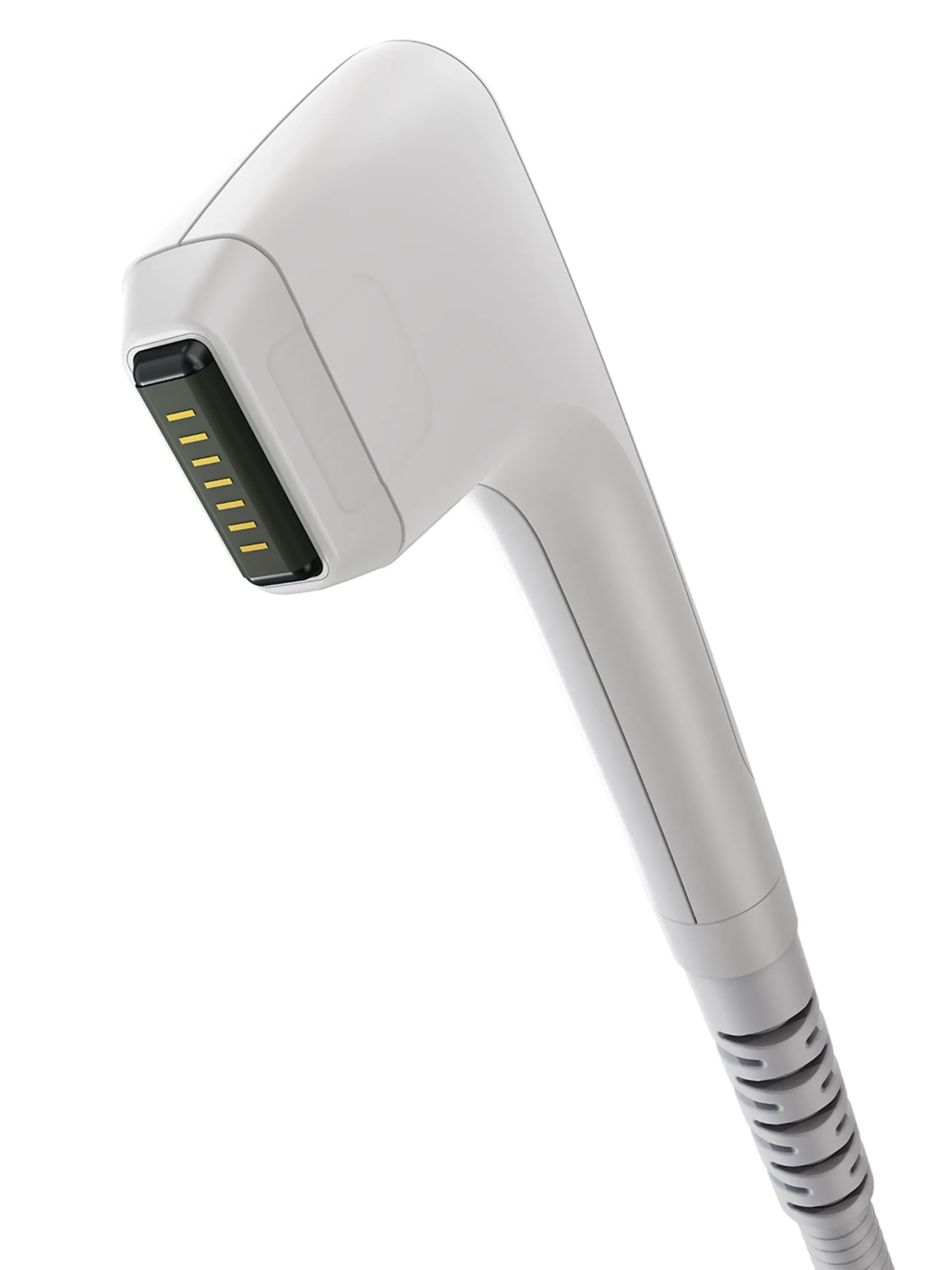
The Sofwave mechanism is not an immediate-tightening effect — it is a dermal-collagen-stimulation effect, which is a fundamentally slower clinical phenomenon. The platform delivers focused ultrasound at the 1.5mm depth to produce discrete dermal-coagulation zones; these zones trigger a cascade of fibroblast activation, neocollagenesis, and tissue-remodelling that unfolds over weeks rather than hours. The histology-confirmed timeline on the manufacturer's clinical-evidence summary shows the dermal collagen density change peaking at approximately week eight to twelve and continuing to refine through week sixteen. Patients booked at the four-week-out mark are looking at the result during the active-build window before the new collagen has finished depositing and remodelling, which is the wrong frame to evaluate against the wedding-day photo standard. By contrast, the patient booked at the twelve-week-out mark is looking at the result during the peak-density window, with another four weeks of refinement still available to absorb the typical photo-shoot intensity. The clinical principle is that energy-based collagen platforms reward patience in the booking calculus, and the pre-wedding planner who understands this books backward from the ceremony date with a twelve-week buffer rather than forward from the trip-availability date with a four-week buffer.
What photo-ready skin actually means at week twelve
The pre-wedding photo standard is higher than the social-evening standard, which means the typical Sofwave result has to be evaluated against a different threshold. At week twelve post-session, the typical pattern is dermal-quality refinement that reads on photography — slightly tighter skin texture, mildly improved light reflection across the cheek and jaw, modest reduction of fine-line patterns in the lateral periorbital and the perioral region, and a small magnitude of contour lift across the mid-face. The honest read is that this is not a transformation; it is an enhancement on a fresh baseline, and the photo improvement reads in the comparison rather than in the standalone shot. Patients evaluating the result on the day of the wedding without the comparison anchor often underestimate the change because the brain anchors to the current appearance rather than to the pre-treatment baseline. The wedding photographer, however, captures both the cosmetic result and the lighting-conditioned skin response, and the post-shoot comparison against archival photos typically confirms the pattern. We hedge for individual variation — patients with stronger baseline laxity will see more dramatic change; patients with already-tight skin will see more refinement than transformation — but the photo-ready standard at week twelve is robust across the typical cohort.
The three-month build window — booking calendar for the typical wedding date
The booking-calendar arithmetic for a pre-wedding Sofwave session works in reverse from the ceremony date. A wedding scheduled for the first week of October books the Sofwave session in the first or second week of July; a December wedding books in September; a spring-April wedding books in January. The twelve-week buffer is the central case; the eight-to-fourteen-week window is the acceptable range. Patients who can only book at the four-to-six-week mark before the wedding are inside the active-build window rather than the peak-density window, and the wedding-day result will be modest compared to what the platform delivers at peak. Patients who book at the twenty-to-twenty-four-week mark are past the peak-density window, with the result settled into the maintenance plateau; this is not a problem per se but means the freshness lane is less pronounced than at the twelve-week ideal. For destination weddings where the planning timeline is more compressed, the booking calculus has to absorb the constraint by accepting either a modest peak-result or by combining Sofwave with adjunctive regenerative bio-actives that compress the build window slightly. The combined-modality approach is discussed in the next section.
Combined-modality pre-wedding plans — Sofwave with regenerative bio-actives or Ultherapy PRIME
A single-modality Sofwave plan is reasonable for early-laxity patients with twelve weeks or more in the booking window. Patients with established laxity beyond Sofwave's dermal-depth lane, or patients with a more compressed booking window, often benefit from a combined-modality plan. Two combinations are typical in the Korean clinic protocols we have observed. The first is Sofwave plus Ultherapy PRIME, with the deeper platform addressing the SMAS-level structural component and Sofwave addressing the dermal-quality component; the typical booking sequence is Ultherapy PRIME at week sixteen and Sofwave at week twelve, with the recovery windows non-overlapping. The second is Sofwave plus regenerative bio-active boosters (exosome, growth-factor), which compress the dermal-quality build window by adding a fibroblast-stimulation signal beyond the energy-based mechanism alone; the typical sequence is Sofwave at week twelve and regenerative actives at week ten and week eight, with the combined build curve peaking inside the wedding window. We do not promote a winner between these combinations — they address different clinical lanes and different baseline profiles — and the choice should be made with the treating physician based on candidacy assessment. The general principle that pre-wedding plans benefit from sequencing rather than from a single late-session is, however, robust.
Myeongdong logistics for the pre-wedding trip
A typical pre-wedding Sofwave trip in Myeongdong is a three-to-four-day stay structured around the session, the candidacy assessment, and a brief social-Seoul experience that fits the patient's energy budget. Day one is arrival and a hotel afternoon, with an evening palace walk or a Bukchon-Cheonggyecheon stroll for the patient with low jet-lag impact; this is also when the consultation appointment for the next morning gets confirmed. Day two is the morning consultation and the early-afternoon Sofwave session, with the typical post-treatment mild flush resolving by the late afternoon and the evening reserved for a relaxed dinner. Day three is a flexible day — light tourism, a department-store shopping block, a heritage-restaurant lunch — that does not stress the post-treatment window. Day four is the return-flight day, with the standard 43-minute AREX express transfer or the 60-to-75-minute airport-limousine bus to Incheon. For combined-modality plans involving Ultherapy PRIME or injectable adjuncts on the same trip, we suggest extending to a five-day stay rather than compressing into the four-day baseline. The pre-wedding context generally rewards the longer stay because the patient's stress profile is already elevated and the trip itself should not add a logistics burden.
Practical candidacy filter — when Sofwave is the right pre-wedding choice and when it is not
The pre-wedding candidacy filter for Sofwave runs through a few honest questions. Patients with early-to-moderate dermal-quality concerns and a twelve-week booking window are inside the platform's sweet spot — the mechanism, the timeline, and the recovery profile all fit. Patients with established structural laxity beyond the dermal-depth lane should consider a Ultherapy PRIME plan with Sofwave as an adjunct rather than the primary modality. Patients with a booking window inside four weeks should temper expectations or choose adjunctive modalities with faster-expressing windows such as filler micro-droplet placement, light injectable adjuncts, and regenerative bio-actives; Sofwave as a four-week-out single modality is not the right call. Patients with active facial dermatitis, recent aggressive resurfacing, or a history of pronounced erythema responses should add a buffer or modify the protocol depth. The Korean Society of Dermatology guidance on candidacy assessment is consistent with this position. The consultation should cover these in the candidacy assessment and the treating physician should make the final call on candidacy fit. We hedge for individual variation because the right answer depends on the specific clinical profile rather than on a general framework, but the booking-window-versus-modality-fit calculus is robust across the typical pre-wedding cohort.
“The pre-wedding planner who understands the twelve-week build window books backward from the ceremony date, not forward from the trip-availability date — and the wedding photos at the eight-week comparison frame confirm why the patience matters.”
Wei Lin
Frequently asked questions
What is the ideal pre-wedding booking window for Sofwave?
Twelve weeks before the ceremony is the central case; the eight-to-fourteen-week range is acceptable. The clinical-build window for the dermal-collagen-coagulation mechanism peaks at week eight to twelve and continues to refine through week sixteen, so the twelve-week buffer places the wedding date at the peak-density window with refinement still available.
Can I book Sofwave four weeks before my wedding?
It is possible but suboptimal. At four weeks post-session, the dermal-collagen-coagulation mechanism is in the active-build window rather than the peak-density window, so the wedding-day result will be modest compared to what the platform delivers at peak. Patients with a compressed booking window should consider combined modalities with faster-expressing components.
Will the photo-ready result actually show in wedding photos?
In the typical case at week twelve, yes — but in the comparison frame rather than the standalone shot. The improvement reads against the pre-treatment baseline rather than as a transformation, which means the post-wedding comparison against archival photos confirms the pattern more clearly than the day-of evaluation. The photographer's lighting captures both the cosmetic result and the skin response.
Should I combine Sofwave with Ultherapy PRIME for the wedding?
The combination is reasonable for patients with established structural laxity beyond the dermal-depth lane. The typical sequence is Ultherapy PRIME at week sixteen and Sofwave at week twelve, with recovery windows non-overlapping. For early-laxity patients, single-modality Sofwave at week twelve is often sufficient and the combined approach is overkill.
What about regenerative bio-actives in the pre-wedding plan?
Regenerative bio-active boosters such as exosome or growth-factor placement can compress the dermal-quality build window by adding a fibroblast-stimulation signal beyond the energy-based mechanism alone. A typical combined sequence is Sofwave at week twelve and regenerative actives at week ten and week eight, with the build curve peaking inside the wedding window.
How long should the pre-wedding Korea trip be?
Three to four days is the central case for a single-modality Sofwave trip; five days is more appropriate for combined-modality plans involving Ultherapy PRIME or injectable adjuncts. The pre-wedding stress profile is already elevated and the trip itself should not add a logistics burden, which means the longer stay is usually the right call when the budget allows.
Can I do the bridal photoshoot before the wedding-day session window peaks?
It depends on the photoshoot timing. A bridal pre-wedding shoot scheduled four-to-six weeks before the ceremony may not capture the peak-density window if the Sofwave session was booked for the twelve-week-out mark. The booking calculus should consider both the ceremony date and the photoshoot date, and may favour an earlier session if the photoshoot is the primary photographic event.
What if I have established laxity and a tight booking window?
The honest read is that a single Sofwave session four-to-six weeks before the wedding will not produce a dramatic transformation. The realistic pre-wedding plan combines the energy-based modality with injectable adjuncts that express faster, accepts a modest peak-result from the energy-based component, or defers the energy-based work to a post-wedding maintenance plan and prioritises the faster-expressing modalities for the trip. The candidacy assessment should cover this realistically.