
Editorial Picks
7 Bakeries That Define Myeongdong's Morning Scene
From Paris Baguette's tourist-facing flagship to a hanok-courtyard pastry kitchen in Bukchon — a hospitable, walkable guide to central Seoul's bakery culture.
Myeongdong, basically, runs on bread before it runs on anything else. The district between Seoul Station and City Hall keeps the kind of bakery density a first-time visitor only fully registers around the second morning of a trip — the moment when the franchise on the corner, the hotel boulangerie on the lobby floor, and the hanok pastry kitchen two subway stops north all begin to feel like genuine options rather than tourist set pieces. This guide is for international visitors who came to central Seoul for the layered reasons travelers come — shopping, palaces, food, maybe a Sofwave session in between — and want a hospitable, walkable read on where the bread is actually good. Seven bakeries, no rankings, all reachable on foot or a one-stop subway ride from Myeongdong Station, organized so a queen on a short trip can build a real morning rotation rather than a single Instagram stop.
Why bakeries are the right lens on central Seoul
Korean bakery culture is its own thing, and central Seoul is where most international visitors first meet it on the ground. The category sits between the Japanese pan-ya tradition and the French boulangerie register — sweeter than French, more savoury-experimental than Japanese, organized around a daily lineup that rotates from cream-filled morning breads through lunchtime sandwiches into late-afternoon cakes. The two national franchises — Paris Baguette and Tous les Jours — together operate more locations in central Seoul than any other food category, and both keep tourist-facing Myeongdong flagships that work as a soft introduction to the format. Underneath that franchise layer sits a quieter set of artisan bakeries — Onion Anguk's hanok courtyard, the Sogong-dong hotel-adjacent European cafes, the pop-up counters where Daejeon's Sungsimdang reaches Seoul through department-store concessions — that read as the next move once the first morning's Paris Baguette has set a baseline. Myeongdong fits this layered reading particularly well: the franchise flagships are inside the district, the hotel boulangeries sit on Sogong-ro on its western edge, and Bukchon's hanok bakery scene is one subway ride north. A traveler with three days and a working pair of shoes can run the full rotation, basically, without ever needing a taxi.
How we built this rotation
Methodology, queens — we are not in the ranking business. The seven bakeries here were assembled around three criteria. One: walkable or one-subway-stop reach from Myeongdong Station, which is the practical anchor for an international visitor staying in a central Seoul hotel. Two: editorial coverage in the recurring Seoul roundups published by Visit Seoul, Visit Korea, and Time Out Seoul, which together form the canonical references for English-language travel decisions about the city. Three: a category mix — two national franchises, two department-store concessions for celebrated regional bakeries, one hanok-courtyard artisan, one hotel-adjacent European boulangerie, and one Tartine-tradition sourdough reference reachable on a Myeongdong detour. The presentation is alphabetical-by-feature, not ranked — every Featured letter is editorially weighted the same, and the order reflects how a real trip walks through them rather than which one is the most photogenic. Pricing is reported in observed Korean won figures from the bakeries' published menus; signage and language support reflect what an English-speaking visitor will actually encounter at the counter. Hours are accurate at editorial time and worth re-checking on the morning of visit. We accept that bakery culture moves faster than any guide can — a popular item will sell out by mid-morning at the higher-traffic locations, and the franchise lineup rotates seasonally — so the recommendation is to treat this rotation as a frame, not a checklist.

Seven bakeries, in the order you would walk them
Featured A through G — alphabetical, not ranked. The first three sit inside Myeongdong proper; the next two on Sogong-ro and inside Lotte and Shinsegae's department-store flagships, both within a five-minute walk of Myeongdong Station; the sixth in Bukchon, one subway stop north on Line 3; the seventh in Itaewon, reachable in roughly fifteen minutes on Line 4 and Line 6 if a sourdough reference is what the morning needs.
Featured A — Paris Baguette Myeongdong
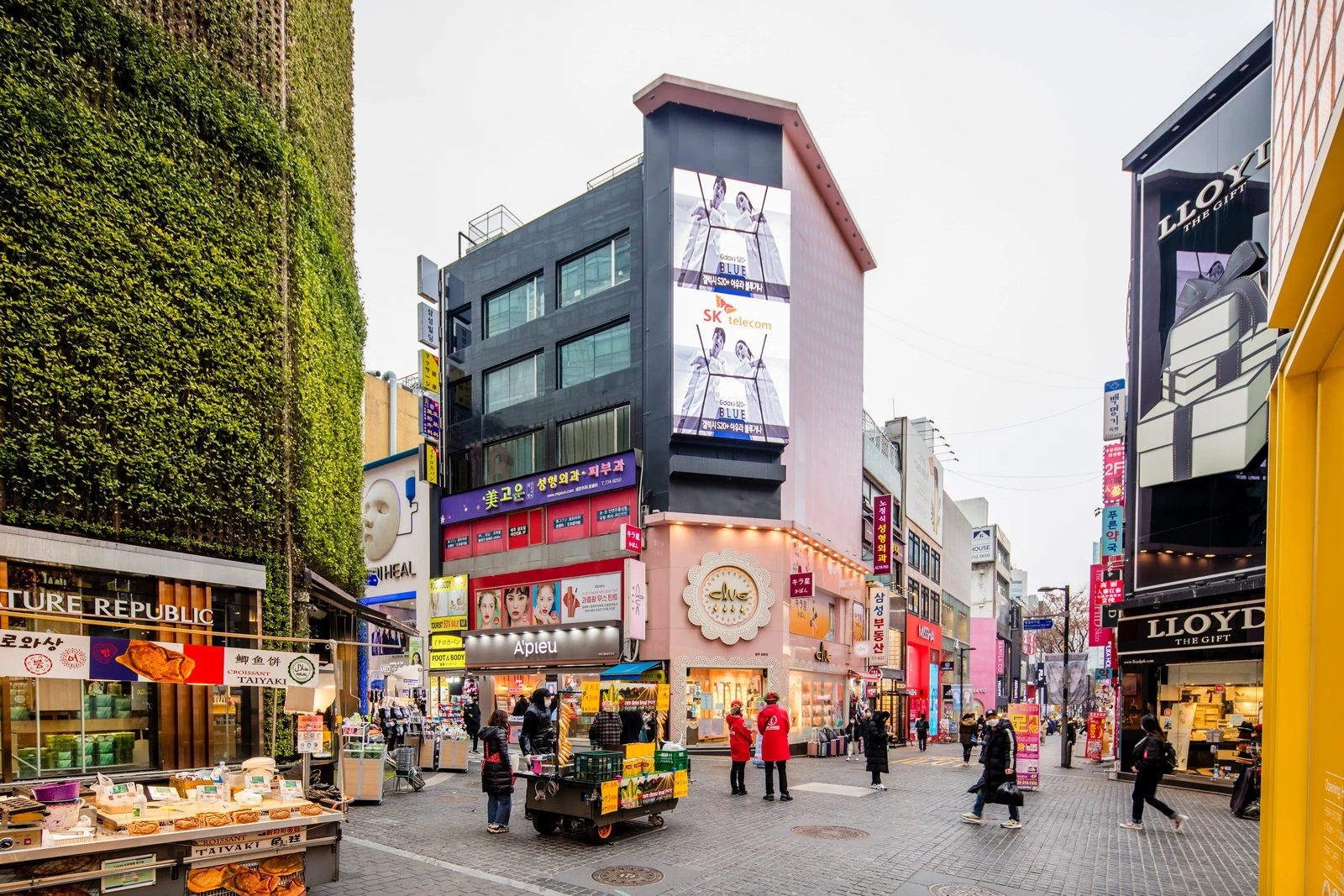
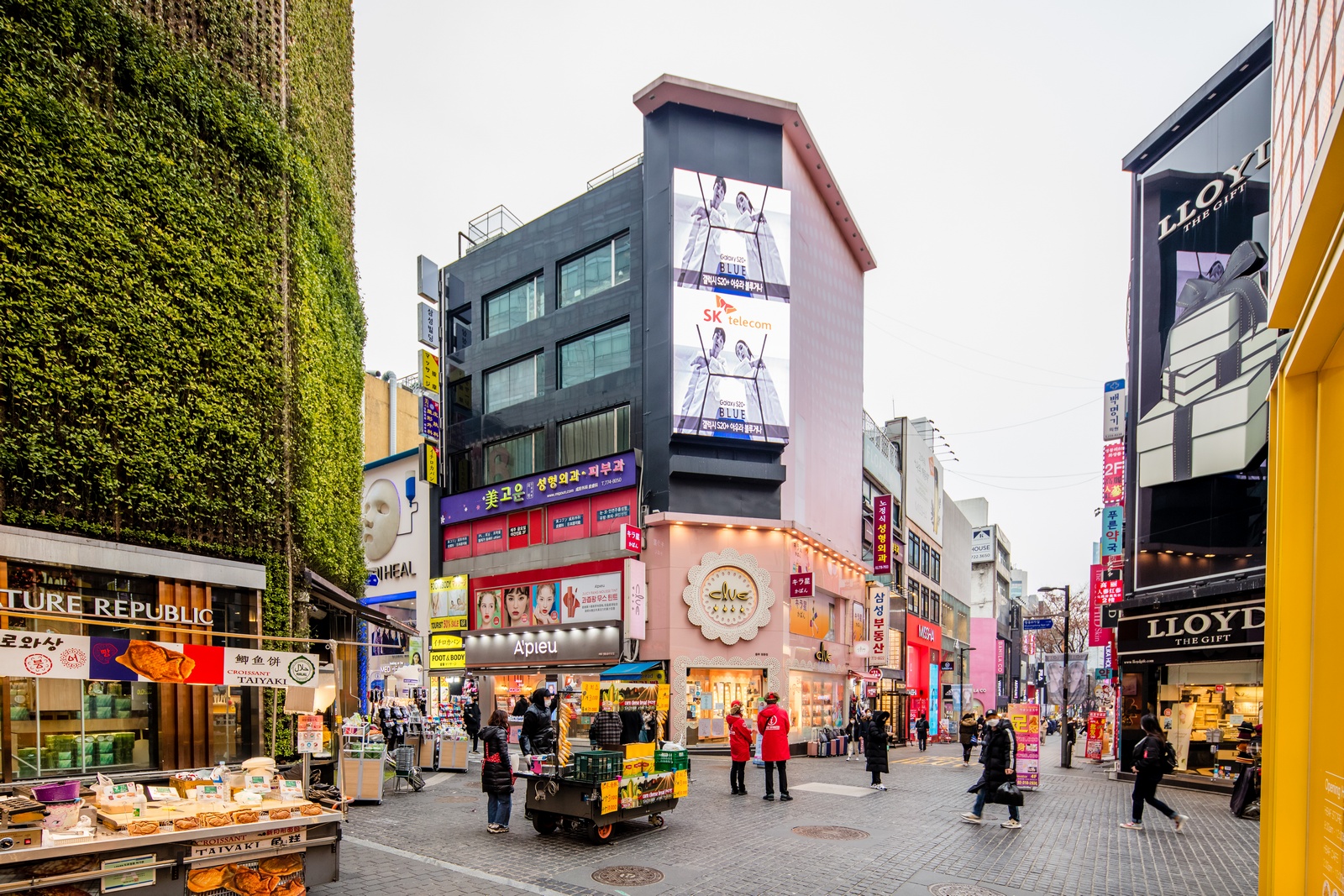
The category's natural entry point. Paris Baguette is the largest Korean bakery franchise, and the Myeongdong-gil flagship is one of the brand's most foreigner-prepared locations in the country — English, Mandarin, and Japanese signage runs across the bread case, the counter staff handle international cards without friction, and the lineup leans into the brand's signature soboro-and-cream morning breads alongside the seasonal cake rotation. Hours run 07:00 to 23:00, which makes it the practical option for travelers arriving on late-evening Incheon Airport buses and waking jet-lagged at six. Pricing sits at ₩2,000 to ₩8,000 per item — basically grocery-store accessible — and the bakery is widely cited in Visit Seoul and Visit Korea roundups as the dependable Korean-bakery introduction. Best for: first-morning orientation, late-night arrival meals, travelers who want the Korean franchise experience without navigating a Korean-only menu. The walnut pastry, the chestnut cream bread, and the seasonal milk-bread loaf are the items most consistently mentioned by returning visitors. A queen on a tight Sofwave-and-sightseeing schedule will probably visit this one twice before the trip ends, basically — it is that conveniently located.
Featured B — Tous les Jours Myeongdong
The other half of the standard Korean-franchise pairing. Tous les Jours is the second-largest national bakery chain — owned by CJ Foodville and recommended alongside Paris Baguette in essentially every English-language Seoul guide — and the Myeongdong flagship matches its sister chain's hours (07:00 to 23:00) and tourist-prep posture (English, Mandarin, Japanese signage; trained counter staff). The differentiation is more aesthetic than categorical: Tous les Jours leans slightly more French-inflected in its viennoiserie, slightly more dessert-forward in its cake case, and slightly less aggressive on the cream-filled-everything axis that Paris Baguette dominates. Pricing matches at ₩2,000 to ₩8,000 per item. Best for: travelers who want a second franchise reference for honest comparison, breakfast pastries with a lighter Korean accent, and anyone whose hotel sits closer to the Tous les Jours location than the Paris Baguette flagship. The bingsu in summer and the chestnut tart in autumn are the seasonally-noted standouts. Visit Korea consistently pairs this bakery with Paris Baguette as the introductory franchise rotation for first-time visitors — we agree.
Featured C — Sungsimdang at Lotte Department Store Main
Daejeon's bakery legend reaches Seoul through a pop-up counter inside Lotte Department Store's main store at 81 Namdaemun-ro, five minutes on foot from Myeongdong Station. Sungsimdang was founded in 1956 in Daejeon, kept its original family-owned single-city posture for decades, and is now widely covered in Time Out Seoul and Visit Korea as one of the most celebrated regional bakeries in the country — particularly for its fried-shrimp bread (often translated as fried-coated soboro on the English signage) and its chive-stuffed savoury bread. The Lotte location operates inside department-store hours (10:30 to 20:00), which makes it an afternoon stop rather than a morning option. Pricing runs ₩3,000 to ₩10,000 per item; department-store English signage is consistent and the counter staff handle international cards. Best for: travelers who would otherwise skip Daejeon, sweet-savoury baked goods that do not exist at the franchise tier, and anyone curious about the Korean-bakery layer above the national-chain register. The fried-shrimp bread sells out by mid-afternoon on weekends; visiting on a weekday morning of the trip is the practical move. This is one of the rare bakery experiences in central Seoul that returns home with the traveler as a story rather than a routine.
Featured D — The Bakers' Table at Sogong-dong
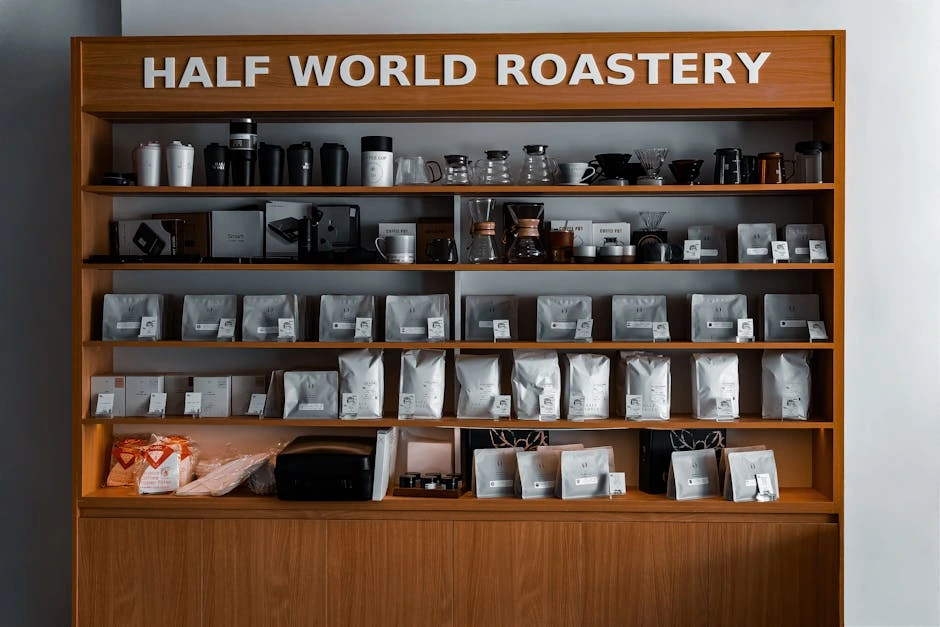
Hotel-adjacent European bakery culture, five minutes from Myeongdong Station on the western side of the district. The Bakers' Table sits in Sogong-dong adjacent to the Westin Josun hotel — one of central Seoul's longest-standing luxury hotels — and operates the kind of European-style boulangerie format that hotel guests across Asia recognize: viennoiserie counter, sourdough loaves baked through the morning, sandwich case from mid-morning forward, a small but seriously-handled coffee program. Hours run 07:30 to 21:00. Pricing is observably higher than the franchise tier — ₩5,000 to ₩15,000 per item — which reflects the hotel-adjacent positioning rather than dramatically different product. The bakery is referenced in Visit Seoul and Time Out Seoul Seoul-hotel-dining roundups as a representative of the central-Seoul boulangerie register. Best for: travelers staying at Westin Josun, Lotte Hotel, or any of the Sogong-dong cluster who want a European-bakery option without traveling outside the district; quieter morning visits before the franchise crowds build; readers who treat bread quality as a meaningful trip variable. English-speaking staff handle ordering without friction; an English-language menu is available on request. The almond croissant, the country loaf, and the savoury tart-of-the-day are the items most consistently noted by returning hotel guests.
Featured E — Maison Kayser at Shinsegae Main
French boulangerie chain operating inside Shinsegae's flagship department store at 63 Sogong-ro, directly adjacent to the Myeongdong shopping district. Maison Kayser is a Paris-origin chain founded by Eric Kayser in 1996 that grew into a global boulangerie network — the Shinsegae location reflects the brand's standard format: viennoiserie counter, sourdough and country loaves, a small sit-down cafe component, and consistently-handled service in English. Department-store hours apply (10:30 to 20:00), which positions this as a midday or afternoon option rather than a breakfast call. Pricing runs ₩4,000 to ₩12,000 per item. The bakery is consistently recommended in Visit Seoul and Visit Korea coverage as the dependable French-boulangerie option directly inside the Myeongdong commercial district. Best for: travelers who want a French-style bread reference without leaving the Myeongdong walking radius, post-shopping coffee-and-pastry stops, and anyone needing a quiet seat after the franchise floor traffic. The pain au chocolat, the baguette tradition, and the lemon tart are the items most often noted by international visitors familiar with the brand from home. The bakery's positioning inside Shinsegae's flagship — Korea's longest-operating department store, founded in 1930 — adds a layered architectural and retail-history dimension to the visit that the franchise-tier options cannot replicate.
Featured F — Onion Anguk in Bukchon
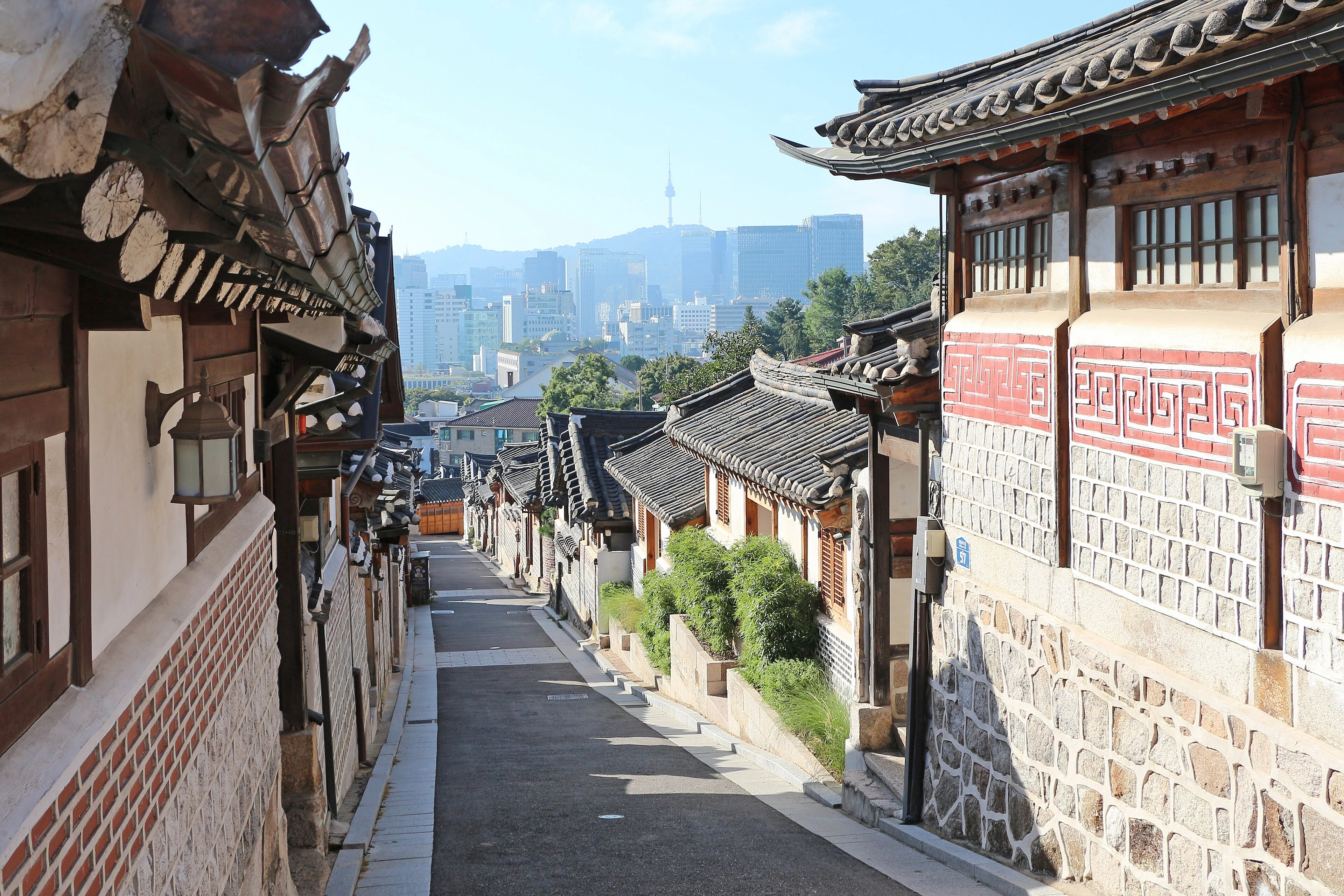
The hanok-courtyard bakery-cafe that defined the new-Seoul-bakery genre. Onion Anguk sits at 5 Gyedong-gil in the Bukchon hanok village, one subway stop from Euljiro on Line 3, and operates inside a restored Joseon-era traditional Korean courtyard house that the bakery has converted into a working pastry kitchen, seating room, and outdoor courtyard. The bakery is among the most internationally photographed in Seoul — covered in Time Out Seoul, Visit Seoul, the New York Times Travel section, and most international design publications — and the morning queue reflects that coverage; arriving at 07:00 (opening hour) is the practical move on weekend mornings. Hours run 07:00 to 22:00. Pricing sits at ₩5,000 to ₩12,000 per item. English-language menus are available and the counter staff handle international orders smoothly. Best for: travelers building a Bukchon morning into their Seoul trip, design-conscious readers who treat architecture as a meaningful trip variable, and anyone who wants a single defining bakery visit rather than a rotation. The pandoro, the cream pan, and the seasonal lemon loaf are the items most consistently noted. The hanok setting — wooden beams, low courtyard walls, a small garden — frames the visit as a slow morning rather than a transactional pastry stop. Pair this one with a Changdeokgung or Gyeongbokgung palace walk for a half-day Bukchon rotation that closes the heritage-and-bakery loop cleanly.
Featured G — Tartine Bakery Seoul (Le Pain Tartine) in Itaewon
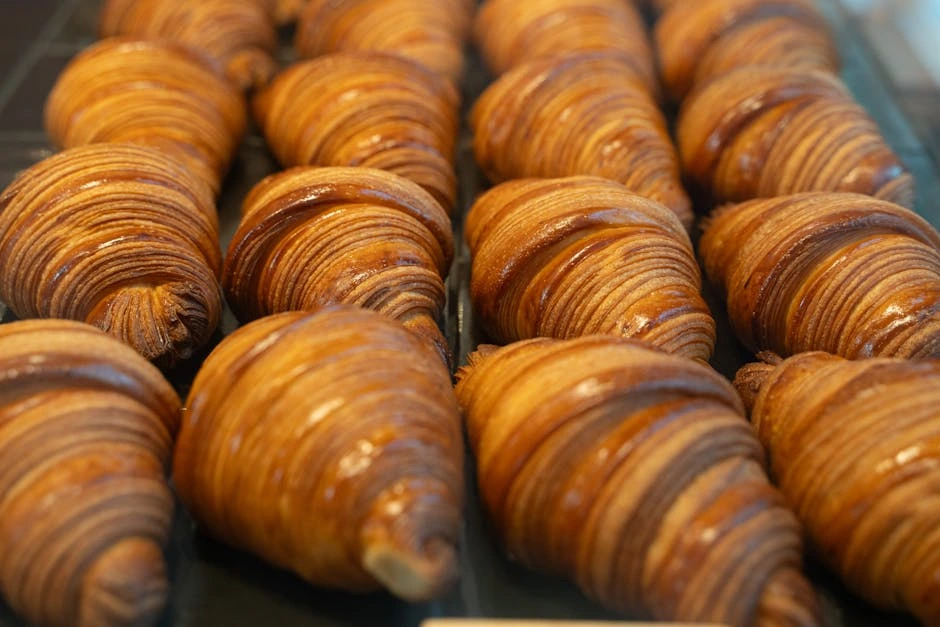
The sourdough-reference option. Tartine-style sourdough — the San Francisco-origin tradition that reshaped the global artisan-bread conversation in the 2000s — reaches Seoul through the Tartine-style bakery operating along Itaewon-ro in Yongsan-gu, roughly fifteen minutes from Myeongdong by subway on Line 4 and Line 6. The bakery is the closest representative of the Tartine-tradition in central Seoul accessible on a short detour from Myeongdong, and is widely cited in international and local Seoul bakery roundups as a credible artisan-bread reference. Hours run 08:00 to 21:00. Pricing sits at ₩5,000 to ₩15,000 per item. English-language menus are standard given the Itaewon district's international-resident base. Best for: travelers who treat sourdough quality as a meaningful trip variable, readers familiar with the Tartine reference from home, and anyone willing to detour outside the immediate Myeongdong walking radius for a defining artisan-bread experience. The country loaf, the chocolate croissant, and the morning bun are the canonical Tartine-tradition items. The detour adds roughly thirty minutes to a morning, returning the traveler to Myeongdong by mid-morning with the day still open for palace walks, department-store shopping, or whatever afternoon the trip is structured around.
How the seven compare at a glance
Categorical positioning, not ranking — pick the rotation that fits the trip.
| Bakery | Neighborhood | Hours | Per-item range | Best for |
|---|---|---|---|---|
| Paris Baguette Myeongdong | Myeongdong | 07:00 - 23:00 | ₩2,000 - ₩8,000 | First-morning orientation, late-night arrival |
| Tous les Jours Myeongdong | Myeongdong | 07:00 - 23:00 | ₩2,000 - ₩8,000 | Second franchise reference, lighter Korean accent |
| Sungsimdang at Lotte Main | Sogong / Myeongdong | 10:30 - 20:00 | ₩3,000 - ₩10,000 | Daejeon legend without leaving Seoul |
| The Bakers' Table | Sogong | 07:30 - 21:00 | ₩5,000 - ₩15,000 | Hotel-adjacent European boulangerie |
| Maison Kayser at Shinsegae Main | Sogong / Myeongdong | 10:30 - 20:00 | ₩4,000 - ₩12,000 | French boulangerie inside the shopping district |
| Onion Anguk | Anguk / Bukchon | 07:00 - 22:00 | ₩5,000 - ₩12,000 | Hanok-courtyard architecture, design-conscious morning |
| Tartine Bakery Seoul | Itaewon | 08:00 - 21:00 | ₩5,000 - ₩15,000 | Sourdough reference on a short subway detour |
How to build a real morning rotation across three days
Day one is the franchise day — basically. Wake up at the hotel, walk to Paris Baguette or Tous les Jours Myeongdong on the morning of arrival, build the baseline read on Korean bakery culture before anything else competes for attention. The franchise tier is also where jet-lagged orientation works best; the bread case is legible, the signage is multilingual, and the items are forgiving of an unsettled appetite. Day two is the department-store day. Mid-morning, walk to Lotte Department Store Main for Sungsimdang's fried-shrimp bread; in the afternoon, after shopping or a palace visit, finish at Maison Kayser inside Shinsegae's flagship for a French-bread counterpoint. Both bakeries sit within a five-minute walking radius of each other on Sogong-ro and pair naturally across a single afternoon. Day three is the architecture day. Take Line 3 north to Anguk Station, walk to Onion Anguk for an early morning at the hanok-courtyard kitchen, and pair the visit with a Changdeokgung Palace walk through the Secret Garden on the same morning — the heritage-and-bakery loop that defines how international visitors actually remember Bukchon. If a fourth morning exists, run the Itaewon detour to the Tartine reference; if not, leave it for the next trip. The Bakers' Table at Sogong sits flexibly across any day for travelers staying at Westin Josun or the surrounding hotel cluster — it works as a quiet alternative whenever the franchise floor traffic feels too heavy.
Where the Sofwave program fits into a bakery-anchored trip
Logistics, briefly. Sofwave SUPERB sessions in central Seoul typically run 30 to 45 minutes, with downtime that is functionally zero for most patients — mild erythema for two to four hours, occasional transient warmth, no swelling pattern of consequence. The treatment slots between hotel breakfast and a late-afternoon palace walk without forcing the patient to choose between the trip and the session. A practical structure looks like: 09:00 bakery at Paris Baguette or Tous les Jours, 10:00 to 11:00 morning at Myeongdong shopping, 13:00 to 14:00 Sofwave session at a central Seoul clinic, 15:00 onwards palace walk or Bukchon afternoon. The bakery rotation continues independently of the aesthetic session — none of these bakeries serve anything that contraindicates a same-day treatment, and the post-session afternoon read at any of the hanok or department-store options is exactly the kind of low-key recovery window that fits the platform's downtime profile. We cover the treatment-side logistics in the half-day treatment guide and the broader same-day-walking framing in the no-downtime overview.
Seasonal notes and what shifts through the year
Central Seoul bakery culture is meaningfully seasonal, and a trip planned across spring, summer, autumn, or winter will encounter a different rotation at every counter listed above. Spring brings cherry-blossom and strawberry lineups — strawberry cream loaves, cherry-blossom pastries at the franchise tier, seasonal tartlets at the European-boulangerie counters. Summer pivots toward bingsu (shaved-ice desserts that most Korean bakeries cross-sell), tropical-fruit pastries, and lighter sandwich case lineups; the Tous les Jours bingsu is the most commonly noted summer specialty in international guides. Autumn is chestnut season, and chestnut-cream pastries appear across essentially every bakery on this list, with the Maison Kayser chestnut tart and the Tous les Jours chestnut bread the standouts. Winter brings the Christmas cake rotation that the Korean franchise tier handles with particular seriousness — Paris Baguette and Tous les Jours both run a full December cake catalogue with international pre-order availability, which travelers from East Asia frequently use as an indirect gift channel. The artisan-tier bakeries (Onion Anguk, The Bakers' Table, the Tartine reference) keep slightly more European seasonal frames — pandoro in winter, galette des rois in early January, hot cross buns in spring around Easter — which the franchise tier touches more lightly. None of this changes the rotation logic above, but a visitor planning a trip in any specific month will find that the lineup arriving at the counter on the morning of visit is meaningfully different from what the previous season delivered.
“Central Seoul's bakery scene rewards the traveler who treats it as a rotation rather than a single stop — one franchise morning, one department-store afternoon, one hanok courtyard, and the trip's bread literacy is complete.”
Editorial — Myeongdong Sofwave
Frequently asked questions
Which bakery is best for first-morning orientation right after landing?
Paris Baguette Myeongdong or Tous les Jours Myeongdong — both open at 07:00, both run multilingual signage, both keep pricing at ₩2,000 to ₩8,000 per item, which is forgiving of jet-lagged decision-making. The franchise tier is also the most legible introduction to Korean bakery culture for a first-time visitor and the right place to build a baseline read before the artisan-tier comparisons begin to make sense on the second morning.
Is Sungsimdang at Lotte Main actually the same bakery as the Daejeon original?
The Lotte location operates as a pop-up counter carrying the Sungsimdang signature lineup — the fried-shrimp bread, the chive-stuffed savoury bread, and the seasonal pastries — sourced from the Daejeon kitchen. The full Sungsimdang experience belongs in Daejeon, where the brand has operated since 1956, but the Lotte counter is the legitimate way to sample the bakery's defining items without leaving central Seoul. Visit Korea covers the Lotte concession as a credible Sungsimdang reference.
How early should I arrive at Onion Anguk on a weekend morning?
At opening, which is 07:00 on most days. Onion Anguk has been among the most internationally photographed bakeries in Seoul since roughly 2019, and the morning queue reflects that coverage particularly on Saturday and Sunday. Weekday mornings are meaningfully calmer; if the trip allows a weekday Bukchon morning, that is the better window. The pandoro and the cream pan are the items that sell out earliest.
Are the department-store bakeries open before the rest of the store?
No — both the Lotte Sungsimdang concession and the Shinsegae Maison Kayser operate inside their department stores' standard hours, which run 10:30 to 20:00. Travelers planning a morning visit to either should treat them as mid-morning or afternoon stops rather than breakfast calls. The franchise tier covers the early-morning window inside Myeongdong proper, which is the practical solve for visitors who want a 07:00 start.
Is Tartine Bakery Seoul worth the Itaewon detour from Myeongdong?
For travelers who treat sourdough quality as a meaningful trip variable, yes — the bakery is the closest credible Tartine-tradition reference in central Seoul, and the subway detour through Line 4 and Line 6 adds roughly fifteen minutes each direction. For travelers who are content with the European-bakery options inside the Myeongdong-Sogong walking radius (The Bakers' Table, Maison Kayser), the detour is optional rather than essential. The morning bun and the country loaf are the canonical items if the detour is made.
Can I pair a Sofwave session with a Myeongdong bakery morning on the same day?
Yes, and it is the structure most travelers eventually arrive at. Sofwave SUPERB sessions in central Seoul typically run 30 to 45 minutes with functionally zero downtime; a 09:00 bakery stop, a 13:00 to 14:00 clinic session, and a 15:00 onwards palace walk or department-store afternoon is a realistic same-day flow. None of the bakeries on this list serve anything that contraindicates a same-day treatment. We cover the clinic-side logistics in our separate half-day treatment guide.
Which bakery is the most international-traveler friendly?
All seven handle international visitors comfortably, but Paris Baguette Myeongdong and Tous les Jours Myeongdong are the most prepared at the counter — English, Mandarin, and Japanese signage runs across the bread case, the counter staff handle international cards without friction, and the items are forgiving of unfamiliar palates. Onion Anguk and The Bakers' Table at Sogong offer English-language menus on request and English-speaking staff, but the franchise tier is the lowest-friction first stop.
How does Korean bakery culture differ from Japanese or French bakery culture?
Korean bakeries sit between the Japanese pan-ya tradition and the French boulangerie register — sweeter than French, more savoury-experimental than Japanese, organized around a daily lineup that rotates through morning breads, lunchtime sandwiches, and afternoon cakes. The category has its own conventions that the franchise tier (Paris Baguette, Tous les Jours) makes most legible to international visitors. Visit Korea publishes a useful general orientation to the category that pairs naturally with this rotation.