Editorial Picks
5 Royal Palaces Within a Short Walk of Myeongdong
A hospitable, walkable guide to the Joseon-era heritage circuit that defines central Seoul — Deoksugung at the foot of City Hall, Gyeongbokgung as the principal palace, Changdeokgung's UNESCO Secret Garden, the quieter Changgyeonggung, and Jongmyo's Confucian shrine.
Central Seoul is a palace city, and Myeongdong is the most practical hotel district for the five-palace circuit that defines the Joseon-era heritage layer of the capital. The first palace, Deoksugung, sits under a ten-minute walk from Myeongdong Station; the principal palace, Gyeongbokgung, is one subway stop north on Line 3; Changdeokgung, Changgyeonggung, and the Jongmyo Confucian shrine cluster east of Gyeongbokgung in the Jongno district, all reachable on the same Line 3 or Line 5 hop. International visitors who came to central Seoul for the layered reasons travelers come — shopping, food, palaces, maybe a Sofwave session in between — can run the whole circuit in two unhurried days without ever needing a taxi. This guide is for the queen on a real trip who wants a hospitable, walkable read on which palace fits which morning, not a hierarchy of which is best.
Why the palace circuit anchors a central Seoul trip
Seoul's palace layer is the heritage register that international visitors most reliably remember. The Joseon dynasty, which ruled Korea from 1392 until 1897 (and the subsequent Korean Empire to 1910), built five major royal palaces in the capital — Gyeongbokgung, Changdeokgung, Changgyeonggung, Deoksugung, and Gyeonghuigung — all of which survive in some restored form, and four of which sit within easy reach of a Myeongdong-area hotel base. The five-palace framing in modern Seoul tourism is canonical; Visit Korea, Visit Seoul, and the Cultural Heritage Administration's royal-palace portal all organize the heritage circuit around this set. The Jongmyo Confucian shrine, which sits in Jongno across the road from Changgyeonggung, completes the heritage layer for international visitors — it is UNESCO World Heritage in its own right and pairs naturally with the palace visits. The circuit reads particularly well from Myeongdong because the district sits at the southern edge of the heritage corridor; Deoksugung is essentially a Myeongdong neighbour at the foot of City Hall Station, and the Jongno cluster is reachable on a single subway transfer. A traveler running a three-day central-Seoul trip can pair palace mornings with afternoon shopping in the Myeongdong commercial district without rerouting the trip — the heritage layer and the retail layer of central Seoul share the same subway spine.
How we organized this circuit
Methodology, briefly. The five sites here are sequenced by walking and transit distance from Myeongdong Station, not by ranking. Deoksugung is the closest at under ten minutes on foot; Gyeongbokgung, Changdeokgung, Changgyeonggung, and Jongmyo cluster north and east on Line 3 and Line 5, all within fifteen-to-twenty minutes of door-to-door transit. Selection draws from three reference layers: the Cultural Heritage Administration's royal-palace portal at royalpalace.go.kr, which is the authoritative reference for palace hours, admission, and Royal Guard Changing Ceremony schedules; Visit Seoul and Visit Korea's English-language attraction coverage, which forms the canonical guide for international visitors; and UNESCO World Heritage listings for Changdeokgung and Jongmyo, which are the two sites on this circuit carrying UNESCO designation in their own right. Admission and hours are reported from the official portals at editorial time and worth re-checking on the morning of visit, as palace operating schedules shift seasonally (winter hours run shorter; specific halls within each palace open and close on rotating maintenance calendars). The presentation is Featured A through E — alphabetically weighted the same, ordered by walking distance from Myeongdong — and is meant as a frame for a real two-day circuit rather than a hierarchy. Visitors wearing traditional hanbok enter Gyeongbokgung and the other major palaces free of charge, which is one of the canonical Seoul travel-and-photography conventions and a meaningful trip variable for the cohort that pairs heritage visits with the hanbok-rental culture in the Bukchon district.
Five palaces and a Confucian shrine, in walking order
Featured A through E — alphabetical, not ranked. The first site sits inside Jung-gu, walking distance from Myeongdong; the remaining four cluster in Jongno-gu, the heritage district directly north and east, all reachable on a single subway hop. The Jongmyo shrine is presented as Featured E (heritage-paired with the four palaces) rather than counted as a sixth palace, since it is canonically a Confucian shrine rather than a royal residence.
Featured A — Deoksugung Palace
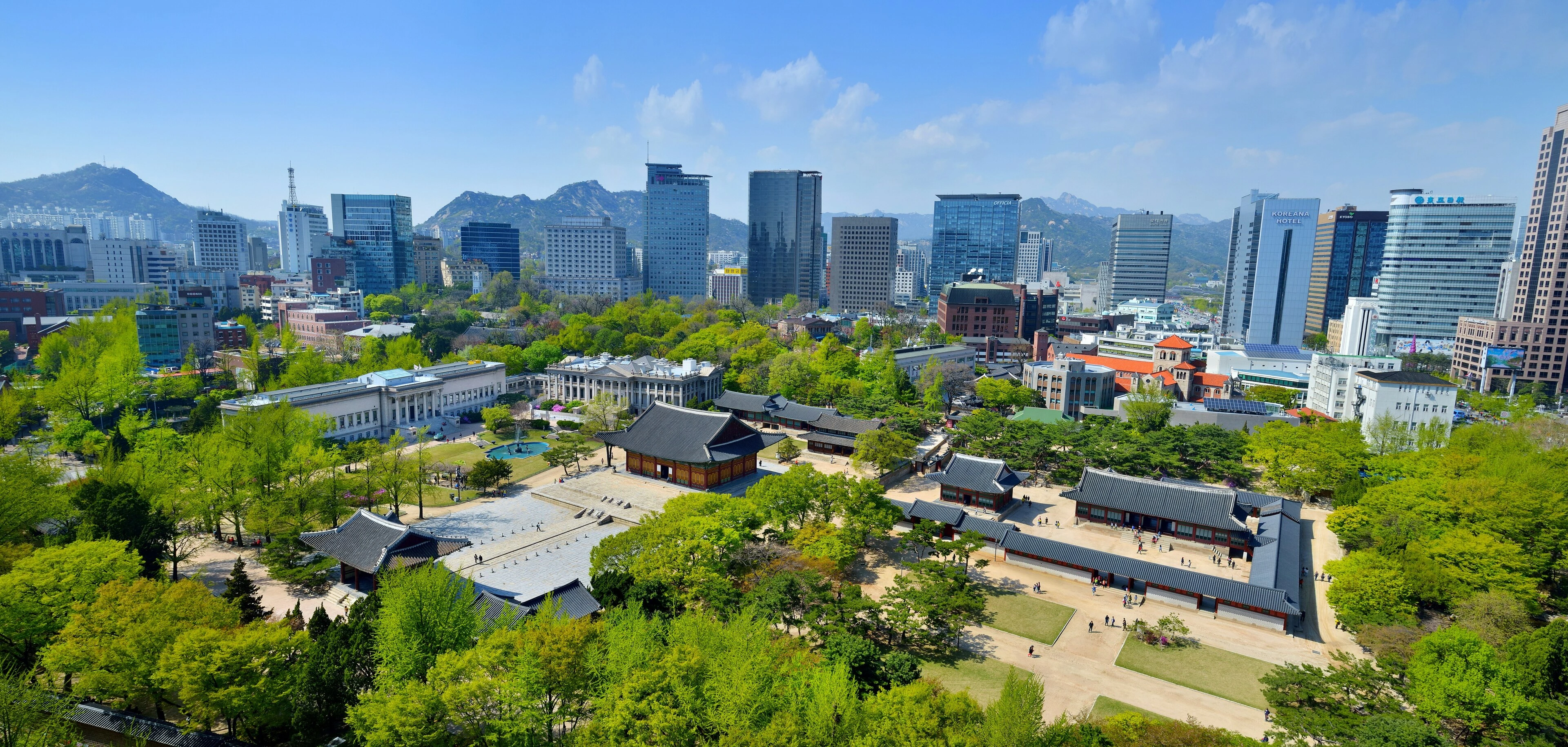
The closest palace to Myeongdong and, basically, the orientation-day visit. Deoksugung sits at 99 Sejong-daero in Jung-gu, under ten minutes on foot from Myeongdong Station and immediately adjacent to City Hall Station on Line 1 and Line 2. Hours run 09:00 to 21:00, closed Mondays, with ₩1,000 admission — the most accessible price point on the circuit. The palace is the only one of the five Joseon royal palaces that combines traditional Korean wooden-pavilion architecture with Western-style stone buildings, a reflection of its role as the residence of Emperor Gojong during the early-twentieth-century transition into the Korean Empire era; the Seokjojeon stone hall, built in 1910 in a Western neoclassical idiom, is the defining architectural counterpoint to the wooden Junghwajeon throne hall that anchors the central courtyard. The Royal Guard Changing Ceremony at the front Daehanmun gate runs three times daily (typically 11:00, 14:00, and 15:30, weather permitting) and is the most accessible of the palace ceremony schedules for visitors with a short morning. English, Mandarin, and Japanese audio guides are available at the ticket office, and the signage throughout is multilingual. Best for: first-day orientation visit, travelers with a short two-hour heritage window, late-afternoon or early-evening palace walks (the 21:00 closing hour is the latest on the circuit and supports a post-dinner visit in summer). Pair this one with a Myeongdong shopping morning and a Sogong-ro bakery lunch for an unhurried half-day rotation that closes the heritage-and-retail loop without leaving the Jung-gu district.
Featured B — Gyeongbokgung Palace
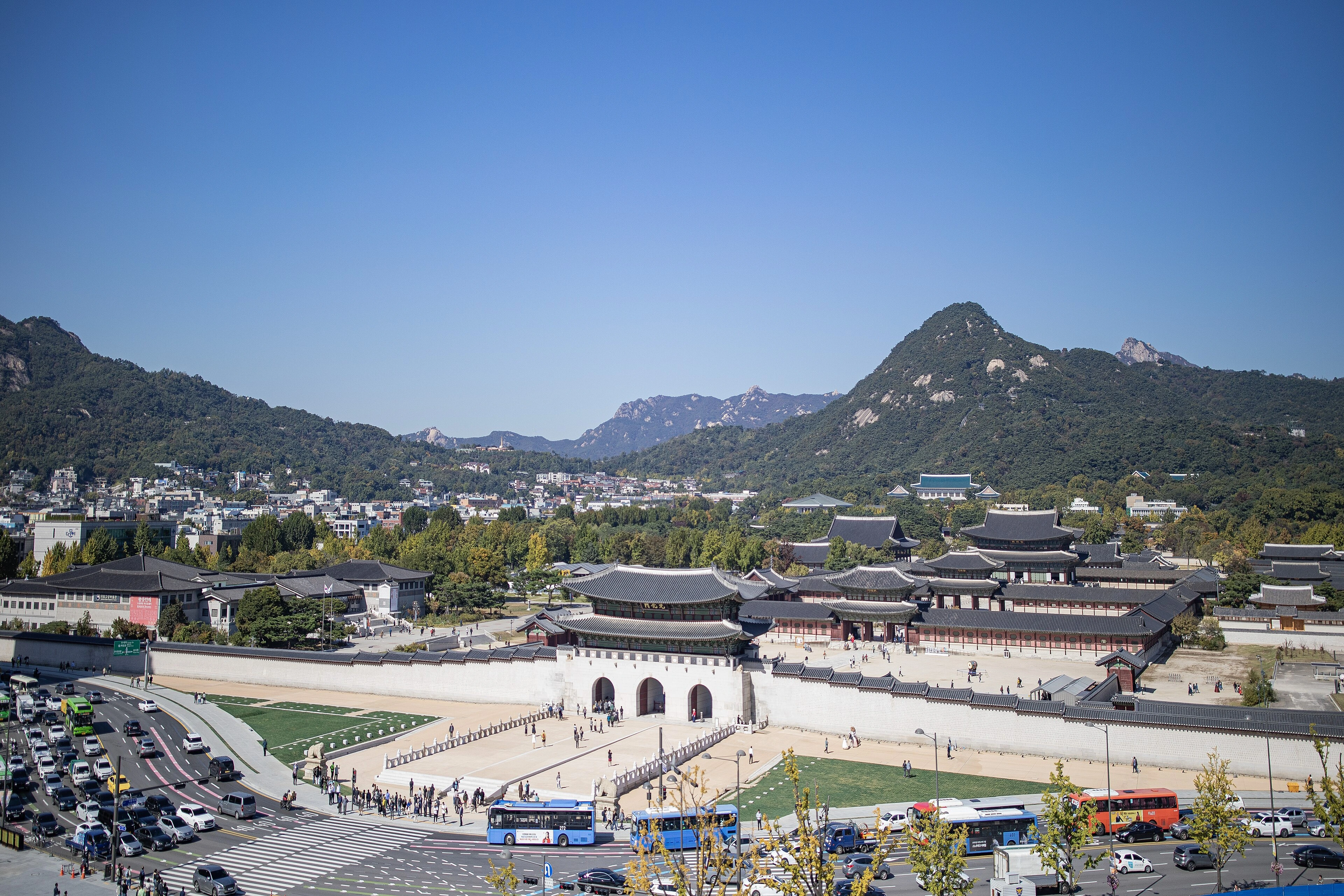
The principal palace and the canonical Seoul heritage visit. Gyeongbokgung sits at 161 Sajik-ro in Jongno-gu, one subway stop from Myeongdong on Line 3 (transfer at Chungmuro), and is the largest of the five Joseon palaces — the principal royal residence of the dynasty from its founding in 1395 until the Japanese-led destruction of much of the complex during the colonial period, with major restoration completed through the late twentieth and early twenty-first centuries. Hours run 09:00 to 18:00 (with seasonal variation; summer hours extend slightly), closed Tuesdays, with ₩3,000 admission and free entry for visitors wearing hanbok. The Royal Guard Changing Ceremony at the Gwanghwamun gate runs twice daily (typically 10:00 and 14:00) and is the most internationally photographed ceremony in the country; the National Folk Museum of Korea and the National Palace Museum of Korea both sit on-site, which adds an extra two-to-three hours for travelers who want the full heritage-and-museum experience. English, Mandarin, and Japanese audio guides are available, and English-language guided tours are scheduled daily through the Cultural Heritage Administration. Best for: the canonical Seoul heritage day, hanbok-rental visitors who want the free-entry photography frame, travelers who plan to combine the palace visit with the adjacent Bukchon hanok village for a full Jongno morning. The Gyeongbokgung visit is the one most international visitors remember from a Seoul trip; it is also the busiest, with peak Saturday and Sunday traffic concentrated between 10:00 and 13:00. Visiting at opening (09:00) or in the late afternoon (15:00 onwards) is the practical move for travelers who prefer quieter walks through the courtyards.
Featured C — Changdeokgung Palace
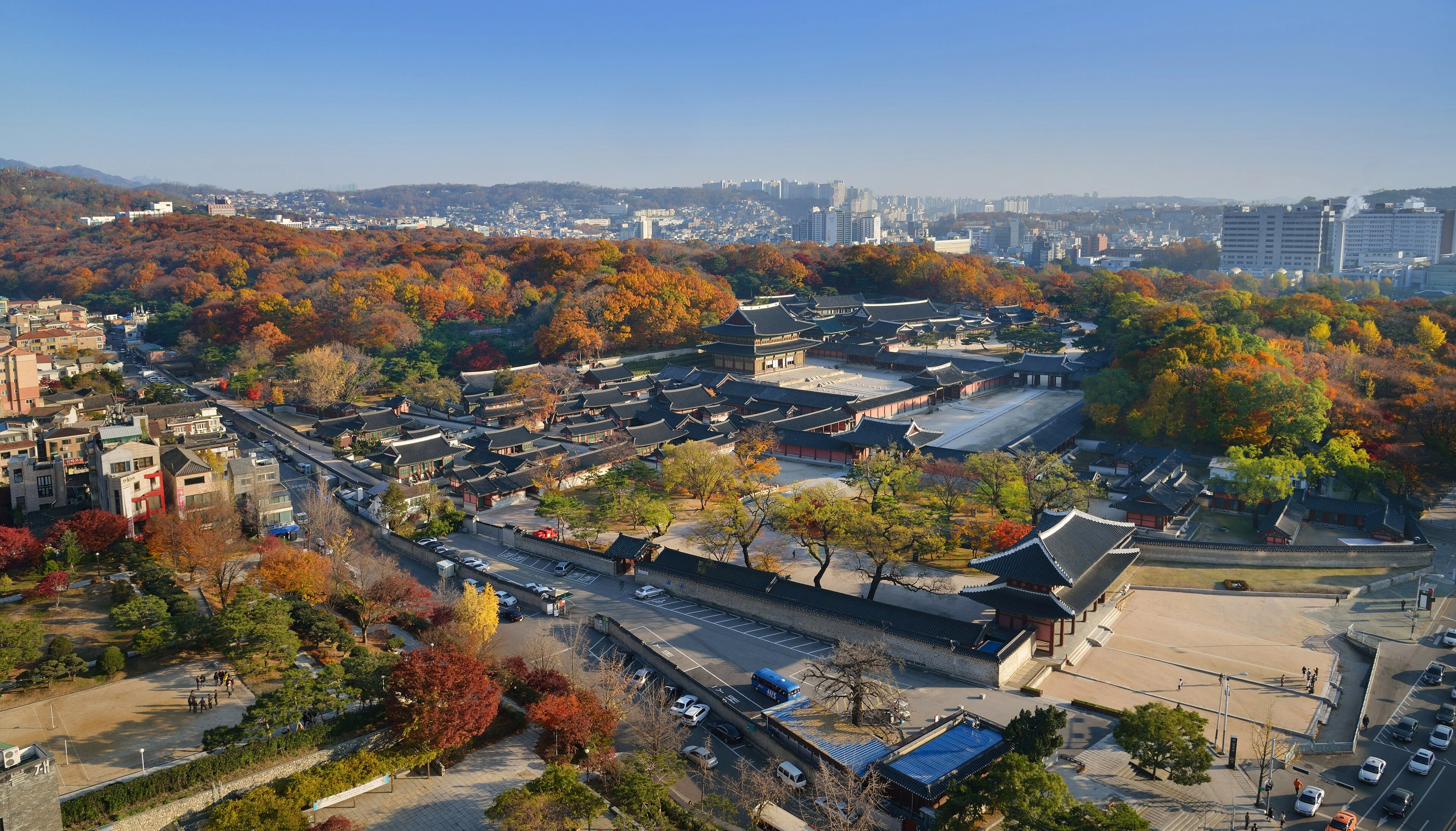
UNESCO World Heritage palace and the most architecturally celebrated of the Joseon residences. Changdeokgung sits at 99 Yulgok-ro in Jongno-gu, one subway stop east of Gyeongbokgung on Line 3, and was the principal royal residence for much of the latter Joseon period — a function it inherited from Gyeongbokgung after the latter was damaged during the late-sixteenth-century Imjin War and remained Korea's main palace until 1872 when Gyeongbokgung was rebuilt. UNESCO inscribed the palace on the World Heritage list in 1997, citing it as an outstanding example of Far Eastern palace architecture and garden design that harmonizes with the surrounding natural landscape rather than imposing on it. Hours run 09:00 to 18:00, closed Mondays, with ₩3,000 admission for the main palace and ₩5,000 for the Secret Garden (Huwon) tour, which requires advance booking through the official portal — the Secret Garden is accessible only on scheduled guided tours, and English-language slots fill several days ahead during peak season. The Huwon walk is the defining Changdeokgung experience: a roughly ninety-minute guided tour through a thirty-hectare landscape garden built for the royal family's private use, with pavilions, ponds, and seasonal planting that reads as the canonical example of Korean palatial-garden design. English, Mandarin, and Japanese guided tours are scheduled daily. Best for: travelers who treat UNESCO designation as a meaningful trip variable, garden-and-architecture readers, anyone who can plan the Secret Garden booking three-to-seven days ahead. International guides routinely pair Changdeokgung with the Bukchon hanok village walk on the same morning.
Featured D — Changgyeonggung Palace
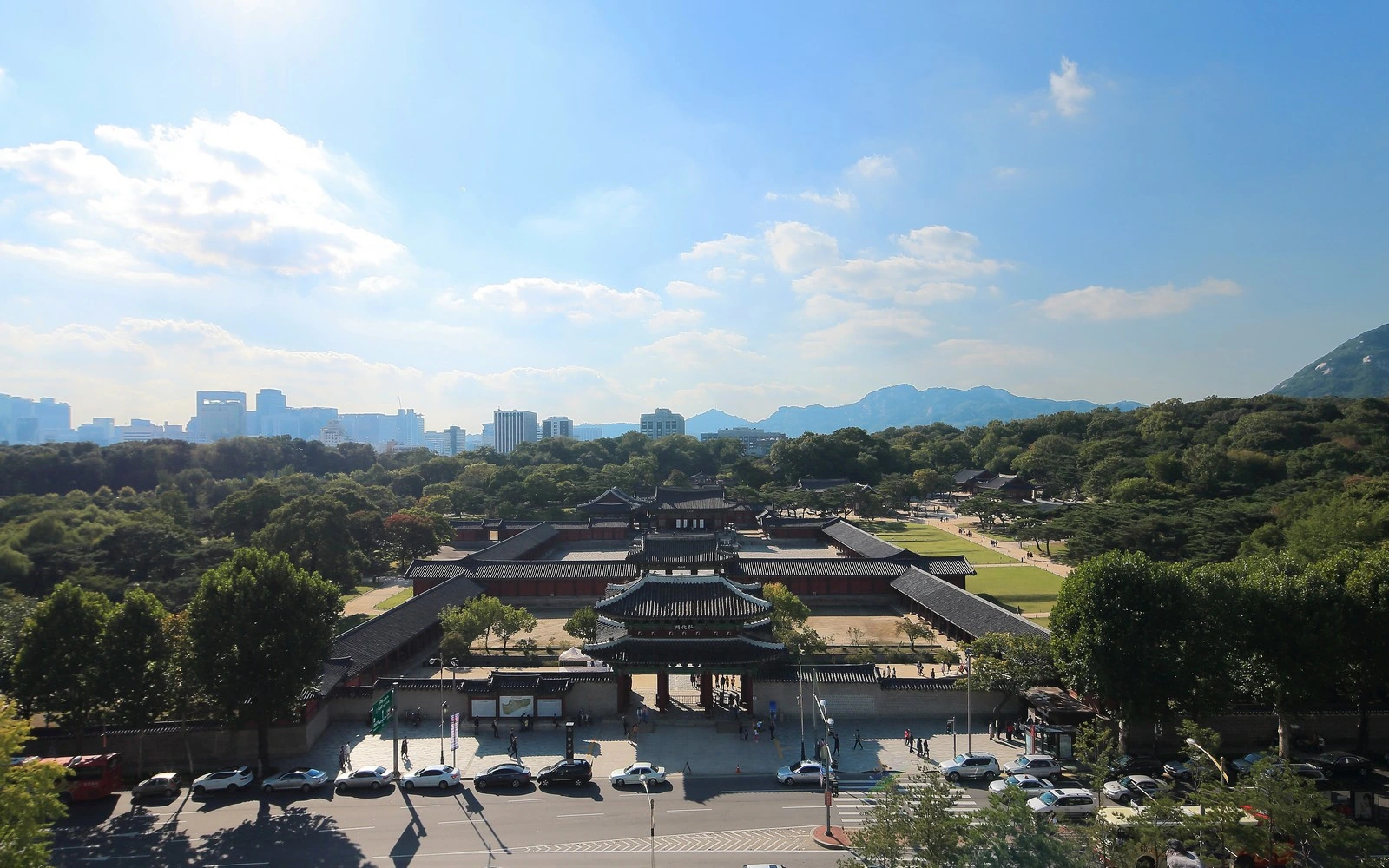
The quieter palace, paired naturally with Changdeokgung. Changgyeonggung sits at 185 Changgyeonggung-ro in Jongno-gu, directly east of Changdeokgung — the two palaces share a connecting gate and were historically operated as a paired royal complex. Hours run 09:00 to 21:00, closed Mondays, with ₩1,000 admission, which matches Deoksugung at the most accessible price point on the circuit. The palace was originally built in 1418 as a residence for retired kings and queen mothers, and although much of the complex was damaged during the colonial period (when it was partially converted into a zoo and botanical garden under Japanese occupation, a chapter that the Cultural Heritage Administration has carefully restored), the restored Honghwamun gate, Myeongjeongjeon throne hall, and the Chundangji pond at the rear of the palace are the canonical visit. The Chundangji autumn foliage walk is one of the most photographed seasonal experiences in central Seoul; visitors who time a trip for late October or early November will find the palace at its visual peak. The 21:00 closing hour supports late-afternoon and early-evening visits that pair well with the Insadong dinner cluster a short walk away. English, Mandarin, and Japanese signage is consistent throughout. Best for: travelers who want a quieter palace experience after Gyeongbokgung's crowds, autumn-foliage photography, anyone building a Changdeokgung-Changgyeonggung paired-palace half-day that uses the connecting gate to move between the two complexes without exiting the heritage zone.
Featured E — Jongmyo Shrine
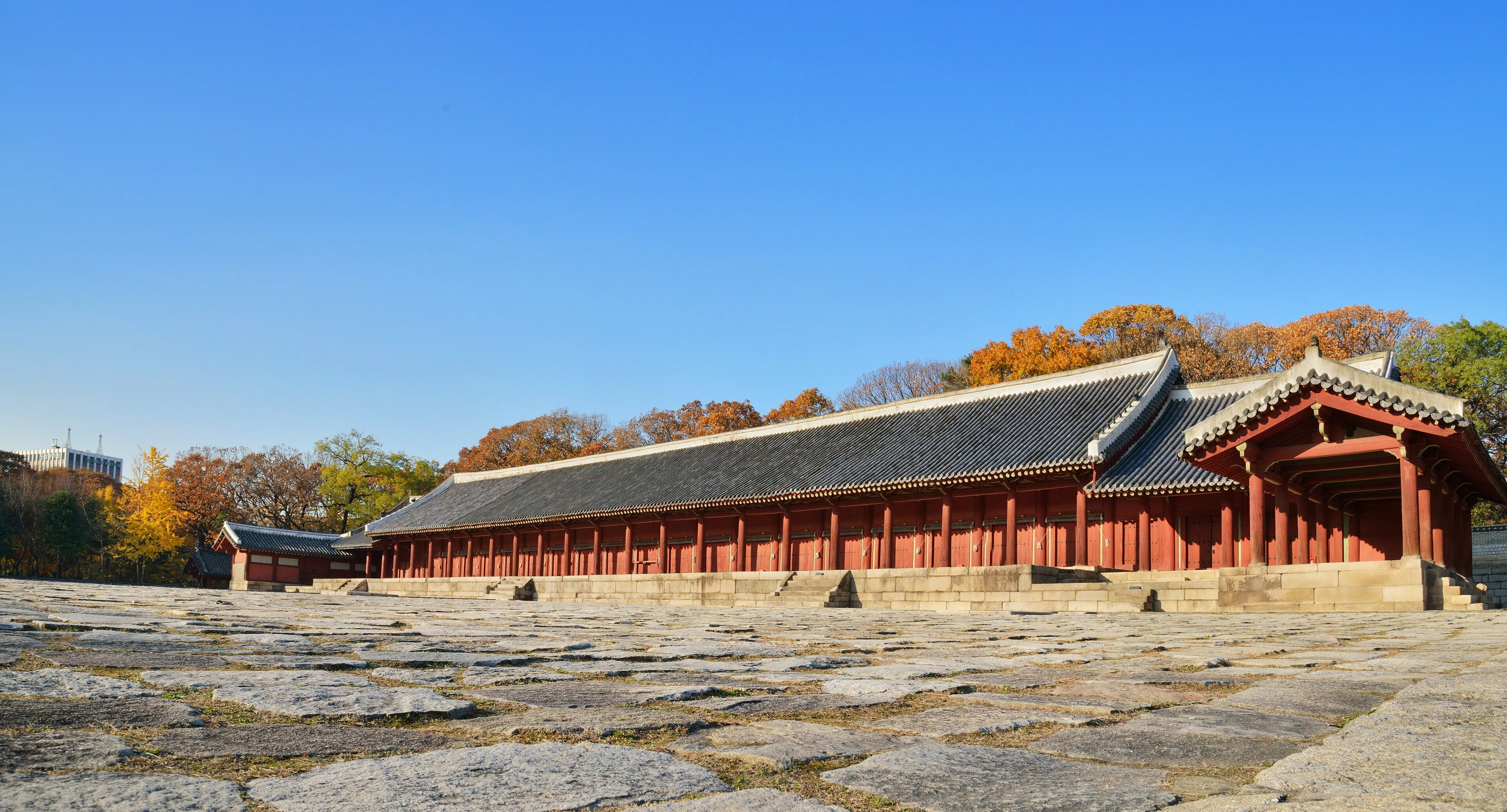
UNESCO World Heritage Confucian shrine and the spiritual register of the heritage circuit. Jongmyo sits at 157 Jong-ro in Jongno-gu, directly south of Changgyeonggung across Jong-ro itself, and is the royal Confucian shrine of the Joseon dynasty — the most important of its kind in the Confucian-cultural sphere and inscribed on the UNESCO World Heritage list in 1995. The shrine functioned as the site of royal ancestor rites for the Joseon kings and queens; the central Jeongjeon hall, which houses the spirit tablets of the principal Joseon monarchs, is one of the longest single-purpose ritual buildings in classical East Asian architecture. Hours run 09:00 to 18:00, closed Tuesdays, with ₩1,000 admission and timed-entry guided tours required on most days (free-walk access is allowed only on Saturdays and on the last Wednesday of each month, which is the country's free-admission day for cultural heritage sites). The architectural register of Jongmyo is meaningfully different from the palace circuit — sober, monumental, ceremonial rather than residential — and the visit reads as a counterweight to the more decorative palace courtyards. English, Mandarin, and Japanese guided tours are scheduled daily. Best for: travelers who want a heritage register beyond the palace courtyards, readers interested in Confucian ritual architecture, anyone whose Jongno morning has time for a single contemplative hour after the Changdeokgung-Changgyeonggung pair. The Jongmyo Jerye (royal ancestor rite ceremony), held annually on the first Sunday of May, is a UNESCO Intangible Cultural Heritage event and the most visually defining of the shrine's calendar moments.
How the five sites compare at a glance
Categorical positioning, not ranking — pick the morning that fits the trip.
| Site | Distance from Myeongdong | Hours | Admission | Best for |
|---|---|---|---|---|
| Deoksugung Palace | Under 10 min on foot | 09:00 - 21:00 (closed Mondays) | ₩1,000 | Orientation visit, short afternoon |
| Gyeongbokgung Palace | One subway stop on Line 3 | 09:00 - 18:00 (closed Tuesdays) | ₩3,000 (free with hanbok) | Canonical heritage day, hanbok visit |
| Changdeokgung Palace | One subway stop on Line 3 | 09:00 - 18:00 (closed Mondays) | ₩3,000 (+₩5,000 Secret Garden) | UNESCO garden design, advance booking |
| Changgyeonggung Palace | One subway stop on Line 3 / Line 5 | 09:00 - 21:00 (closed Mondays) | ₩1,000 | Quieter half-day, autumn foliage |
| Jongmyo Shrine | One subway stop on Line 3 | 09:00 - 18:00 (closed Tuesdays) | ₩1,000 | UNESCO Confucian shrine, ritual register |
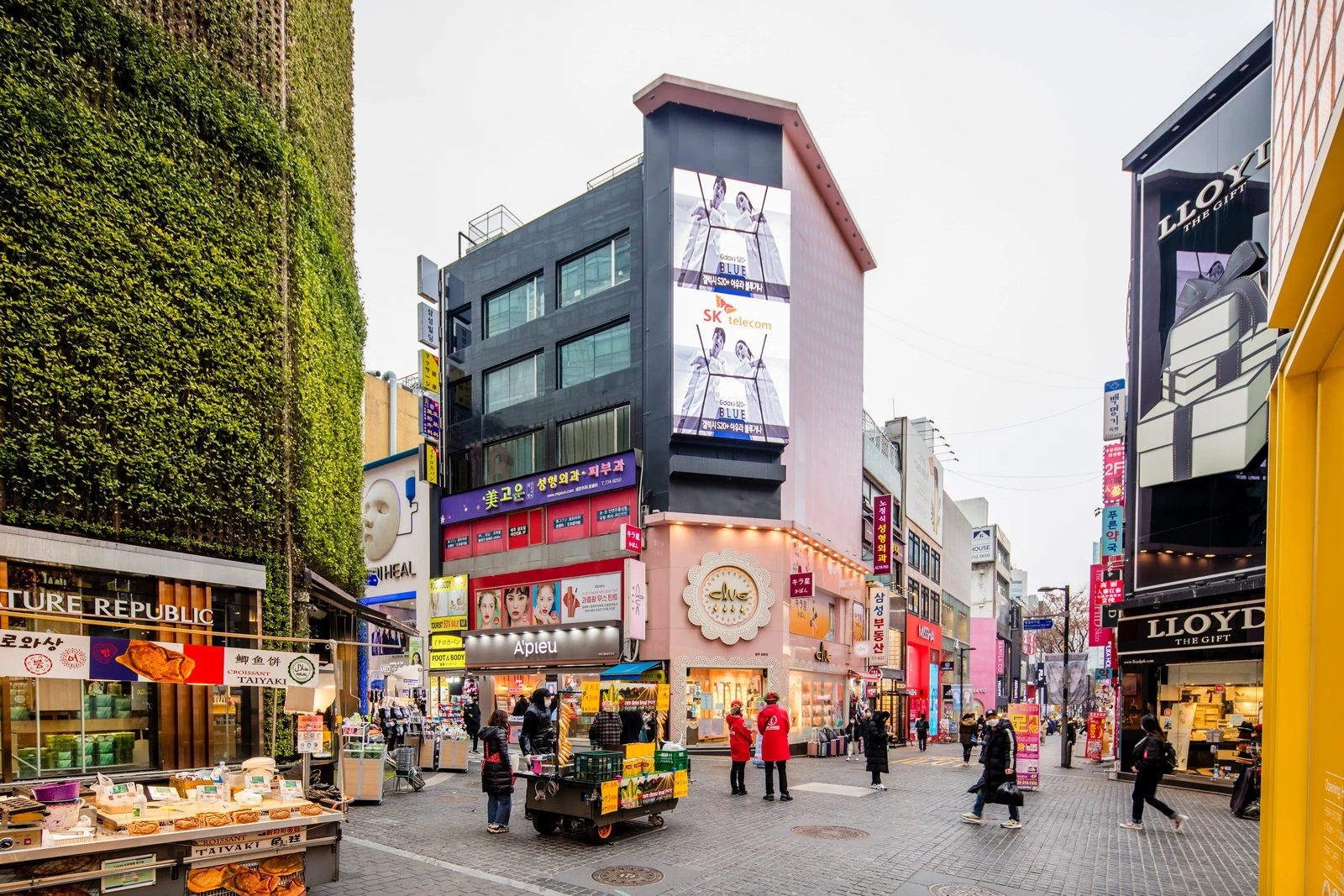
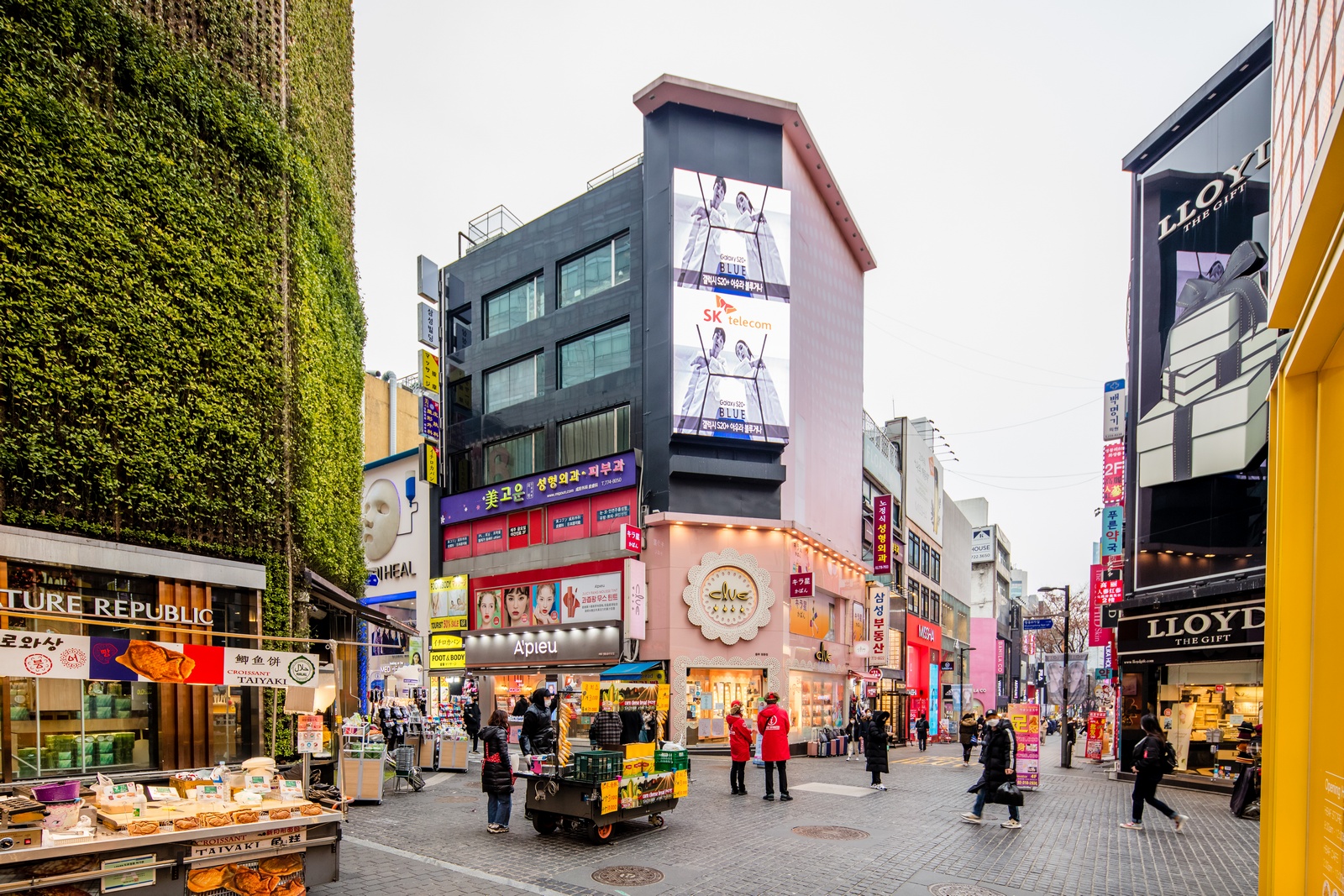
How to build a real two-day palace circuit from Myeongdong
Day one is the close-in day. Wake at the hotel, walk to Deoksugung Palace at 09:00 opening to catch the morning Royal Guard Changing Ceremony at the Daehanmun gate, spend ninety minutes through the wooden Junghwajeon throne hall and the Western Seokjojeon stone hall, and exit by mid-morning for a Sogong-ro bakery lunch (Maison Kayser at Shinsegae Main or The Bakers' Table at Sogong-dong both pair naturally with a Deoksugung walk). In the afternoon, take Line 3 from Chungmuro one stop north to Anguk and walk to Gyeongbokgung for the 14:00 Royal Guard Changing Ceremony at the Gwanghwamun gate — the late-afternoon Gyeongbokgung visit is calmer than the morning peak, and the National Folk Museum on-site supports a quieter post-ceremony hour. Close the day in the Bukchon hanok village adjacent to the palace for evening dinner and walking, basically closing the western heritage loop in one day. Day two is the eastern day. Take Line 3 to Anguk and walk east to Changdeokgung for a 09:00 opening, having booked the Secret Garden tour three to seven days ahead through the Cultural Heritage Administration portal; the Huwon walk runs roughly ninety minutes through the palace's defining UNESCO-designated landscape garden. Exit through the connecting gate into Changgyeonggung for the paired quieter palace walk, pausing at the Chundangji pond for what is — in late October and early November — among the most photographed autumn moments in central Seoul. After lunch in Insadong (the Jongno-cluster restaurant district), walk south across Jong-ro to Jongmyo for a 14:00 or 15:00 guided tour through the Confucian shrine, which closes the eastern heritage loop with the most architecturally sober register on the circuit. Return to Myeongdong by Line 3 in time for a late-afternoon Sofwave session or an evening dinner at the hotel cluster. The two-day rhythm is what the heritage circuit was built for; the third day, if it exists, belongs to the western circuit add-ons — the National Museum of Korea in Yongsan, the War Memorial of Korea, or the Han River walk south of Yongsan — none of which require a fresh palace round.
Where the Sofwave program fits into a palace-anchored trip
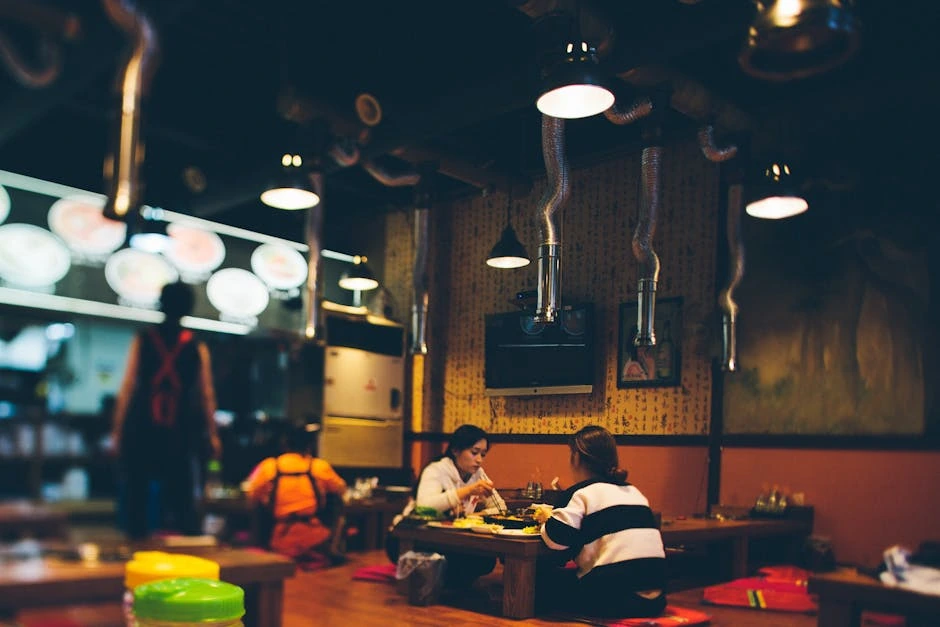
Logistics, briefly. Sofwave SUPERB sessions in central Seoul typically run 30 to 45 minutes, with downtime that is functionally zero for most patients — mild erythema for two to four hours, occasional transient warmth, no swelling pattern of consequence. The treatment slots between a morning palace visit and a late-afternoon Bukchon walk or evening dinner without disrupting the trip. A practical structure looks like: 09:00 Gyeongbokgung opening, 12:00 Bukchon lunch, 13:30 to 14:30 Sofwave session at a central Seoul clinic, 15:30 onwards Changdeokgung Secret Garden tour (booked the same day or the previous afternoon). None of the palace walks contraindicate a same-day treatment — they are outdoor heritage visits at a moderate walking pace, which is exactly the post-session activity profile the platform's downtime allows. Visitors wearing hanbok for the free-entry palace photography frame should still avoid direct sun exposure on the treated areas for the first six to twelve hours, which the Bukchon shaded lanes and the palace covered pavilions naturally support. We cover the treatment-side logistics in the half-day treatment guide and the broader same-day-walking framing in the no-downtime overview.
Seasonal notes and what shifts through the palace year
Central Seoul's palace circuit is meaningfully seasonal, and a trip planned across spring, summer, autumn, or winter will read the same five sites quite differently. Spring brings the cherry-blossom moment across Deoksugung's Doldam-gil stone-wall walk and the Gyeongbokgung outer courtyards, and is the most internationally photographed palace-photography window of the year; the cherry-blossom peak typically runs the last week of March through the first ten days of April, with significant year-to-year variation tracked by the Korea Meteorological Administration. Summer brings extended evening hours at Gyeongbokgung's Starlight Tour and at Changgyeonggung's evening palace openings, which are scheduled programs that release on the Cultural Heritage Administration portal in advance and frequently sell out within hours of release — a queen planning a July or August Seoul trip should monitor the portal closely in May and June for the evening-program calendar. Autumn is the visually defining palace season, particularly at Changgyeonggung's Chundangji pond and across Changdeokgung's Secret Garden, where the late-October-to-early-November foliage frames the heritage register at its most photographed. Winter is the quieter palace experience — Gyeongbokgung in snow is one of the canonical Seoul winter photographs, with the white-on-tiled-roof contrast that has anchored Korean tourism imagery for decades — and the lower crowd density supports unhurried walks that the peak-season months do not allow. The Royal Guard Changing Ceremonies run year-round at Deoksugung and Gyeongbokgung, weather permitting, with rain cancellations and winter-cold adjustments published the morning of each scheduled ceremony. None of this changes the two-day circuit logic above, but a trip planned for any specific month will find the palaces meaningfully different from what the previous season delivered, which is part of why returning international visitors so often build a second or third Seoul trip around a different palace season.
“Central Seoul's heritage circuit rewards the traveler who treats it as two unhurried days rather than a single-day checklist — Deoksugung and Gyeongbokgung in the west, Changdeokgung and Changgyeonggung and Jongmyo in the east, and the Sofwave session slotting between mornings without disrupting either.”
Editorial — Myeongdong Sofwave
Frequently asked questions
Which palace is closest to a Myeongdong hotel base?
Deoksugung Palace, at under ten minutes on foot from Myeongdong Station and directly adjacent to City Hall Station on Line 1 and Line 2. It is also the most affordable on the circuit at ₩1,000 admission and has the latest closing hour at 21:00, which supports late-afternoon and early-evening visits that the other four palaces do not accommodate.
Do I really need to book the Changdeokgung Secret Garden in advance?
Yes — the Secret Garden (Huwon) is accessible only on scheduled guided tours, and English-language slots typically fill three to seven days ahead during peak season (April through June and September through November). Booking through the Cultural Heritage Administration's official royal-palace portal is the canonical reservation channel. Walk-ins are sometimes possible on weekday mornings outside peak season but should not be relied upon.
Is the hanbok-rental free-entry policy worth doing?
For travelers planning a full heritage day at Gyeongbokgung or Changdeokgung, yes — the ₩3,000 admission waiver is incidental, but the photography frame is the canonical Seoul travel experience and the rental shops cluster densely in the Bukchon and Anguk districts near both palaces. Rental typically runs ₩10,000 to ₩30,000 for a half-day, with English-speaking staff at most shops. Visit Seoul publishes a useful general orientation to the hanbok-rental culture for first-time visitors.
Can I see all five sites in a single day?
Logistically possible but not recommended. The walking distances within each palace are substantial — Gyeongbokgung alone runs to ninety minutes at an unhurried pace, and Changdeokgung's Secret Garden adds another ninety — and a five-site single-day attempt collapses the heritage register into a checklist. The two-day rhythm described in this guide is what the circuit was built for; one day for Deoksugung and Gyeongbokgung in the western corridor, one day for Changdeokgung, Changgyeonggung, and Jongmyo in the eastern corridor.
Which palace is best for autumn foliage photography?
Changgyeonggung Palace, specifically the Chundangji pond at the rear of the complex, which is among the most photographed autumn moments in central Seoul through late October and early November. Changdeokgung's Secret Garden is also visually defining in autumn, but the Huwon's scheduled-tour-only access restricts the photography window relative to Changgyeonggung's open walking grounds. Gyeongbokgung's western courtyards are a credible third option.
Is Jongmyo really a palace, or is it different?
Different — Jongmyo is a Confucian shrine, not a royal residence, and is presented as Featured E on this circuit as the heritage-paired UNESCO World Heritage site rather than counted as a sixth palace. The architectural register is sober and ceremonial rather than decorative, and the visit reads as a counterweight to the more residential palace courtyards. It pairs naturally with the Changdeokgung-Changgyeonggung pair on the eastern heritage day.
Can I combine a Sofwave session with a palace morning on the same day?
Yes, and most international patients eventually arrive at the same-day structure. Sofwave SUPERB sessions in central Seoul typically run 30 to 45 minutes with functionally zero downtime; a 09:00 palace opening, a midday transit, a 13:30 to 14:30 clinic session, and a late-afternoon second palace or Bukchon walk is a realistic flow. The palace walks are outdoor activity at a moderate pace, which fits the post-session activity profile the platform's downtime allows. We cover the clinic-side logistics in our separate half-day treatment guide.