Treatment Guide
How often should you repeat Sofwave?
The annual-versus-18-month decision for Myeongdong-area international patients — what the biology says, what the senior physicians actually do, and where the marketing copy oversells the cadence.
Sofwave repeat-treatment cadence at Myeongdong-area Seoul clinics typically falls into two real-world patterns: an annual cadence (every 11 to 13 months) for patients in the early-to-moderate laxity lane who want to hold a defined result line, and an 18-month spacing (every 16 to 20 months) for patients on a slower-progression skin profile or those layering Sofwave with other deeper modalities on an alternating year-on-year-off rhythm. The 12-month interval is the most-marketed number, but the honest clinical read from senior physicians in the Myeongdong cluster is that the right cadence is patient-specific rather than universal — driven by the collagen-remodelling timeline (peak neocollagenesis at three to six months post-treatment, plateau and gradual decay from nine to fifteen months), the patient's baseline skin elasticity, lifestyle factors, and whether Sofwave is the primary maintenance platform or part of a layered protocol. This guide gives the travel-fluent international patient the honest framework before booking, with detail on what the Sofwave Medical clinical evidence actually documents on durability and what the Korean Society of Dermatology consensus reads as appropriate timing. The MFDS-registered platform status verified through the Korean Ministry of Food and Drug Safety database applies to every authorised provider; what varies clinic to clinic is the consultation discipline around recommending the right interval rather than the most-frequent one. Wei Lin's editorial brief is to give you the read that lets you push back when a clinic recommends a cadence that does not match your skin profile.
The collagen-remodelling timeline — what actually happens between sessions
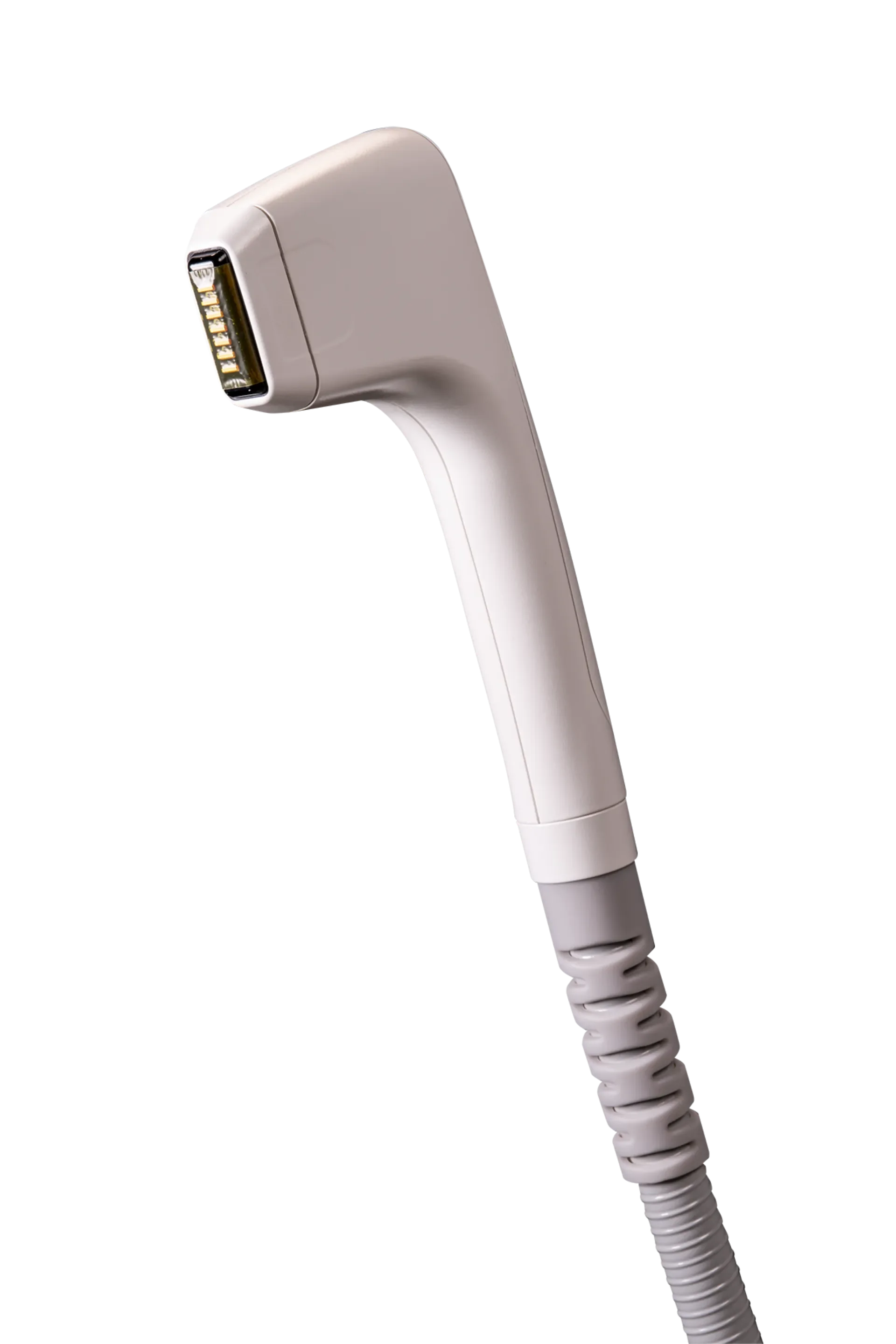
Sofwave SUPERB delivers synchronous ultrasound beams at a target depth of approximately 1.5mm in the mid-dermis, generating thermal coagulation zones that trigger a wound-healing-and-remodelling cascade. The neocollagenesis response begins within the first weeks post-treatment, accelerates through months one to three, and typically peaks at the three-to-six-month window. From month six to month nine, the new collagen matures and the visible tightening result reaches its strongest expression — this is the period most international patients reference when they tell friends about the result. From month nine to month fifteen, the remodelling response gradually decays as normal age-related collagen turnover resumes; the visible result holds well through the first year but begins to soften in the second year. The Sofwave Medical clinical-evidence dossier documents twelve-month durability data showing meaningful retention of the treatment-induced improvement at one year post-single-session, with patient-reported satisfaction scores remaining elevated through the documented follow-up window. The honest read is that month twelve is not a sudden cliff; it is a soft inflection point where some patients still hold a strong result and others start to feel the laxity returning. The annual-cadence recommendation comes from clinics anchoring the repeat session at the point where the biological response is still actively contributing — not waiting until the result has fully dissipated — to keep the cumulative collagen matrix building rather than oscillating up and down. This is sound biology, but it is not the only valid cadence.
When the annual cadence is the right call
The annual cadence (11 to 13 months between Sofwave sessions) is appropriate for several patient profiles seen at Myeongdong-cluster clinics. First, patients in the early-to-moderate laxity lane who want to hold a defined result line and prevent visible progression — typically late-30s through mid-50s, with elastosis on the moderate end of the photodamage spectrum, who responded well to the first session and want to keep building on the cumulative collagen base. Second, patients with a lifestyle that places higher demand on the skin's structural envelope — significant UV exposure history despite current SPF discipline, mild-to-moderate smoking history (current or recent ex-smoker), high-stress occupational profile, or patients in geographies with strong sun and pollution loads where the baseline collagen turnover is accelerated. Third, patients running Sofwave as the primary maintenance platform without a layered protocol; these patients benefit from the more-frequent re-stimulation because they are not relying on a second modality to fill the durability gap. Fourth, patients whose first session delivered a strong but not maximal result and who are using the second session within twelve months to push the cumulative response higher rather than simply to maintain. The senior physicians in the Myeongdong cluster who run patient-specific consultations rather than packaged-cadence sales typically recommend annual for these profiles and are explicit about the reasoning. The annual cadence is the default in the marketing copy; it is the right default for many but not all international patients.
When 18-month spacing is the better decision
The 18-month spacing (16 to 20 months between Sofwave sessions) is the better call for several other patient profiles. First, patients on a slower-progression skin profile — strong baseline elasticity, minimal photodamage, disciplined skincare history, and a constitutional profile where collagen turnover is not accelerated; these patients often hold the first-session result strongly through eighteen months and would over-treat at the twelve-month mark. Second, patients layering Sofwave with a deeper modality on an alternating cadence — for example, alternating Sofwave with Ultherapy PRIME (or another deep MMFU platform) on a year-on-year-off rhythm so each platform sees an 18-month-or-longer interval, with the layered modality filling the durability gap. Third, patients on a multi-modality regenerative-medicine programme where Sofwave is one of several actives and the senior physician is sequencing for cumulative-but-spaced stimulation rather than frequent re-treatment. Fourth, patients whose first session delivered a strong result and whose lifestyle and skincare discipline are such that the visible improvement is holding well at month twelve; these patients can extend to eighteen months without a meaningful result decay and avoid the over-treatment risk of running a cadence faster than the biological response actually requires. The honest read here is that the 18-month spacing is often the smarter clinical decision for the slow-progression patient profile, but it is rarely the cadence that the clinic markets because it produces less revenue per patient. Clinics that recommend the longer interval when it is clinically appropriate are demonstrating consultation discipline.
Layered protocols — Sofwave alternating with deeper modalities
A common pattern in the Myeongdong-cluster clinics that handle international patients on a multi-year programme is to alternate Sofwave with a deeper modality (Ultherapy PRIME, Thermage FLX, or polynucleotide-led regenerative bio-actives) on an annual rhythm — Year 1 Sofwave, Year 2 deeper modality, Year 3 Sofwave, Year 4 deeper modality. This pattern produces an effective 24-month interval between Sofwave sessions while delivering an annual treatment visit and maintaining continuous biological stimulation across the dermis-and-SMAS depth range. The clinical logic is that Sofwave addresses the mid-dermal layer (1.5mm depth) and the deeper MMFU or Thermage modality addresses the SMAS or deep-dermal layer respectively; alternating the depth target each year produces a more comprehensive structural maintenance protocol than running either platform alone at the marketed annual cadence. For travel-fluent international patients who already plan an annual Korea trip, the alternating protocol fits naturally into the existing travel rhythm and produces a different platform each visit rather than running the same protocol twelve months apart. The senior physician should determine whether the alternating-modality pattern is appropriate; some patients are better served by a single-platform protocol at the right interval, and the layering decision is patient-specific. The honest version is that the alternating pattern is not strictly superior to single-platform-at-the-right-cadence for every patient — but for the right clinical profile, it produces a more comprehensive long-arc result than either platform alone.
What the consultation conversation should sound like
The consultation at a Myeongdong-cluster clinic recommending the right Sofwave repeat cadence should cover several specific points. First, an assessment of how well the patient is holding the first-session result at the current time point — through visual examination, palpation of the laxity zones, and ideally through standardised imaging if the clinic has the imaging discipline (some Myeongdong clinics maintain three-month, six-month, and twelve-month imaging in the patient file). Second, an honest read on the patient's skin profile lane — early laxity, moderate laxity, advanced laxity, and the corresponding cadence recommendation. Third, a discussion of whether Sofwave is operating as the primary maintenance platform or as part of a layered protocol with another modality. Fourth, a frank conversation about the patient's lifestyle factors — UV exposure, current and historical smoking status, skincare discipline, stress profile, sleep quality — that influence the durability of the first-session response. Fifth, the senior physician's explicit recommendation on the interval and the reasoning behind it, with the patient encouraged to push back if the recommendation does not align with the patient's read on the durability of the first session. The clinics that do this well will sometimes recommend an interval longer than the patient was expecting; the clinics that do this badly will recommend an interval shorter than the patient's clinical profile requires. The international patient who reads the Korean Society of Dermatology consensus and understands the collagen-remodelling timeline can have a more sophisticated conversation with the consulting physician and make a better-informed booking decision.
First-time international patients — start at single session, plan the cadence after
For first-time international patients booking Sofwave at a Myeongdong-cluster clinic, the right starting point is a single-session protocol with an explicit conversation about cadence after the response has been assessed at month three or month six. Booking a multi-year cadence at the first consultation, before the patient's individual response to the platform has been observed, is rarely the right clinical move — and clinics that push multi-session pre-paid packages on first-time international patients are pushing a revenue pattern rather than the right clinical decision. The Sofwave platform produces a strong individual response in most patients on the early-to-moderate laxity spectrum, but the response curve varies — some patients see the strongest result at month three, others at month six, others at month nine; some patients hold the result through eighteen months with no decay, others see meaningful softening at month twelve. The first-session response read informs the second-session timing. Travel-fluent international patients should plan the first Korea trip as a single-session protocol with a six-month follow-up imaging window (some Myeongdong clinics offer remote follow-up review via the clinic's international-patient coordinator), and book the second-session trip after the response curve has been read. This is the pattern senior physicians recommend; the multi-year-pre-paid-package pattern is the marketing artefact. Wei Lin's editorial position is that the honest cadence is the patient-specific one, and the international patient who plans the first trip as a single session has the most flexibility for the second-session decision.
“The right Sofwave cadence is the one your skin actually requires — not the one the marketing copy defaults to. Senior physicians in the Myeongdong cluster who recommend the longer interval when it fits the patient profile are demonstrating consultation discipline, not lost revenue.”
Wei Lin
Frequently asked questions
How often should I repeat Sofwave at a Myeongdong clinic?
Either annually (11 to 13 months) or at 18-month spacing (16 to 20 months), depending on your skin-profile lane, lifestyle factors, and whether Sofwave is the primary maintenance platform or part of a layered protocol. The senior physician at consultation should give the patient-specific recommendation; the universal-12-month line is the marketing copy, not the clinical truth.
When does the result from a Sofwave session actually peak?
Neocollagenesis peaks at three to six months post-treatment, the visible result strengthens through month nine, and durability holds through month twelve with documented Sofwave Medical clinical-evidence data. From month twelve onwards the result gradually softens as normal collagen turnover resumes. The right repeat-treatment timing anchors against this biological curve.
If I am holding my first-session result well at twelve months, should I still book a repeat?
Not necessarily. If the visible result is holding strongly at month twelve, the 18-month spacing is often the better clinical decision. A senior physician at a Myeongdong-cluster clinic should assess your durability read through visual examination and ideally through standardised imaging before recommending the second-session interval.
What is the alternating-modality pattern and is it right for me?
An alternating-modality protocol runs Sofwave one year and a deeper modality (Ultherapy PRIME, Thermage FLX, or polynucleotide regenerative bio-actives) the next year, producing an effective 24-month Sofwave interval with annual treatment visits. The pattern fits multi-year programmes and travel-fluent international patients who already plan annual Korea trips; the senior physician should determine whether your clinical profile suits it.
Are pre-paid multi-session packages a good idea for first-time international patients?
Usually not. The right approach is a single-session protocol on the first Korea trip, followed by a response-curve read at month three or month six, then book the second-session trip after the individual response has been assessed. Clinics that push multi-session pre-paid packages on first-time international patients are pushing a revenue pattern rather than the right clinical decision.
Will more-frequent Sofwave sessions produce a better cumulative result?
Up to a point, yes — annual cadence builds on the cumulative collagen matrix more effectively than 18-month spacing for the right patient profile. Beyond annual cadence (running Sofwave every six to nine months) does not produce a proportionally better result and risks over-treatment of the dermal layer. The annual cadence is the practical ceiling for most patients.
Does the lifestyle factor read actually change the cadence recommendation?
Yes — meaningful UV exposure history, smoking history, high-stress occupational profile, and geographic factors all accelerate baseline collagen turnover and can push a patient from the 18-month spacing into the annual cadence category. The senior physician should ask about these factors at consultation; if the consultation does not include this discussion, the recommendation may not be patient-specific.
How does this guide compare to the universal-annual recommendation on most clinic websites?
Most clinic websites market the annual cadence as the universal recommendation because it produces more frequent patient visits. The honest clinical read is that the annual cadence is the right call for many patient profiles but not all; the 18-month spacing is often the better decision for slow-progression skin profiles and for layered-protocol patients. This guide presents both real-world patterns rather than defaulting to the marketing line.