Treatment Guide
Premium, mid, budget — what each tier actually gives you
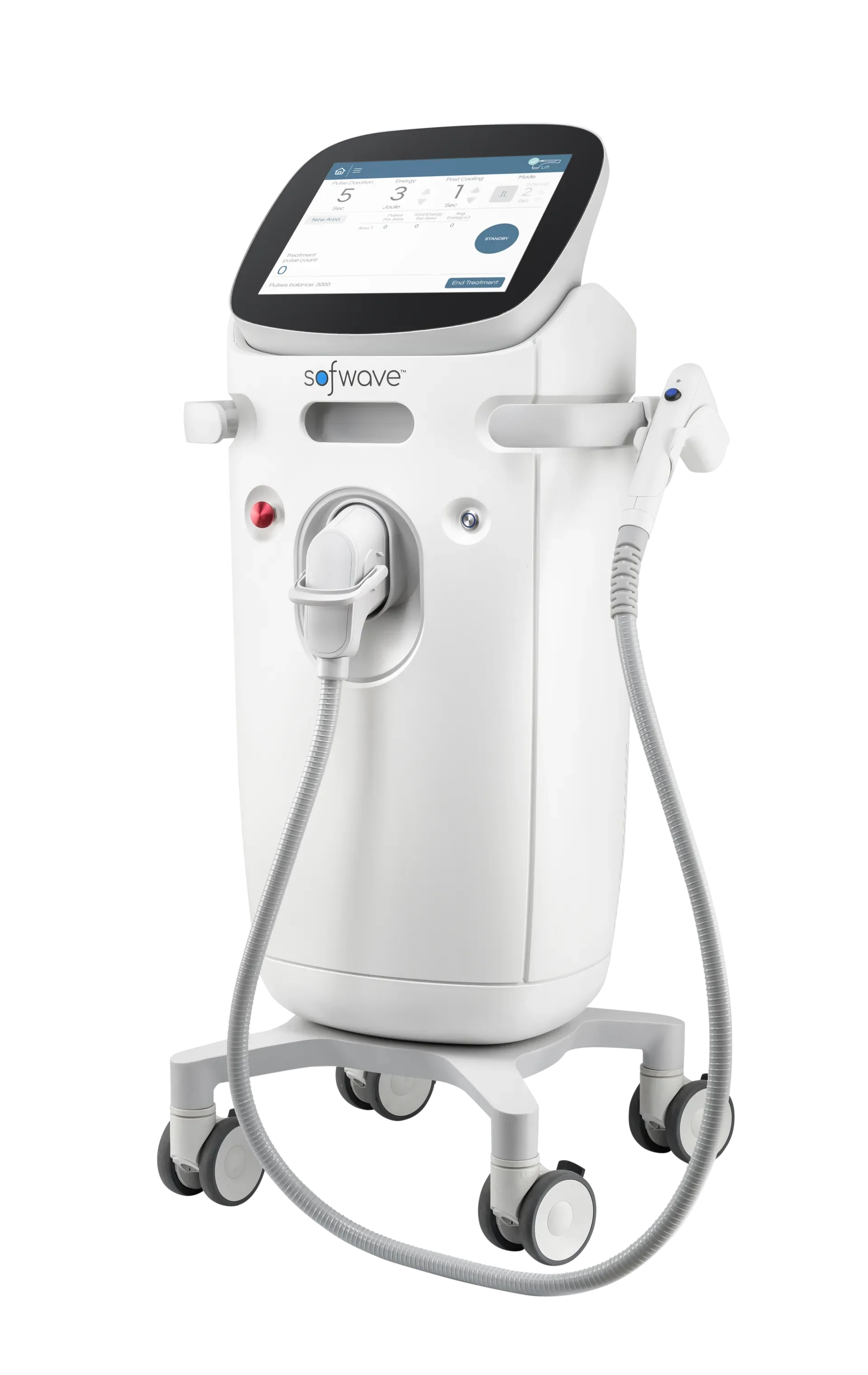
The Sofwave platform is identical across the Myeongdong tier band. What changes is the consultation density, the protocol discipline, the aftercare protocol depth, and the physician seniority — this guide reads the tradeoff honestly.
Sofwave pricing at Myeongdong-area Seoul clinics splits into three observable tiers: a premium band at roughly KRW 2,200,000 to KRW 3,500,000 for a single-face protocol, a mid band at roughly KRW 1,800,000 to KRW 2,200,000, and a budget band at roughly KRW 1,200,000 to KRW 1,800,000. The Sofwave SUPERB platform itself is identical across all three tiers — every authorised provider operates the same device verified through the Sofwave Medical authorised-provider directory and the Korean Ministry of Food and Drug Safety platform registration. What changes between the tiers is not the device, not the beam-pulse-count protocol, and not the underlying treatment mechanism — what changes is the consultation density, the senior physician's involvement, the protocol customisation discipline, the aftercare protocol depth, the imaging follow-up rigour, and the international-patient coordination infrastructure. This guide reads the tradeoff honestly so that travel-fluent international patients can match their tier choice to their clinical profile and travel logistics rather than defaulting to the highest band on assumption or the lowest band on price alone. Wei Lin's editorial position is that the right tier for a given patient is the one where the consultation discipline matches the complexity of the patient's case — not always premium, not always budget, and not always mid. The KHIDI-registered medical-tourism facilitator framework operated by Sora Media, the publishing arm of HEIM GLOBAL (A-2026-04-02-06873) requires that this kind of editorial guidance acknowledges the genuine variation in clinic positioning without presenting any single tier as universally superior.
Premium tier (KRW 2,200,000-3,500,000) — what you actually get
The premium-tier Myeongdong-cluster clinic at the KRW 2,200,000 to KRW 3,500,000 single-face price point typically delivers an extended consultation with the senior physician (often 30 to 45 minutes), a detailed clinical-history review including prior energy-based-device treatments and any contraindications, standardised photographic imaging at the consultation visit, and a customised protocol discussion that maps the beam-pulse-count allocation to the patient's specific laxity zones rather than running a standard template across the face. The treatment session itself runs the same Sofwave SUPERB device at the same depth and beam configuration as the budget-tier clinic — the platform does not deliver more energy or a different mechanism at higher price — but the protocol customisation often allocates more pulses to the patient's priority zones and fewer pulses to zones that do not require treatment, producing a more tailored result. The aftercare protocol at the premium tier typically includes LDM ultrasound aftercare sessions (one or two over the following week), application of regenerative skincare in-clinic, written aftercare instructions in the patient's preferred language, and a follow-up imaging appointment at three months and six months. International-patient coordination at the premium tier is usually strong — multi-language clinic staff, clear pre-arrival logistics, and remote follow-up review via the clinic's coordinator channel after the patient returns home. The premium tier is the right choice for patients with a complex clinical history, layered-protocol planning, or those who want the imaging follow-up rigour to track the response curve over time. It is not always the right choice for patients with a straightforward early-laxity profile booking a first-time single-session protocol; for some patients the premium tier delivers detail they do not need at a price they do not need to pay.
Mid tier (KRW 1,800,000-2,200,000) — the international-patient sweet spot
The mid-tier Myeongdong-cluster clinic at the KRW 1,800,000 to KRW 2,200,000 single-face price point is where the majority of international-patient bookings concentrate. The consultation runs 15 to 30 minutes with the treating physician — adequate for a focused clinical-history review and a standard protocol discussion, though typically without the customisation depth of the premium tier. The treatment session uses the same Sofwave SUPERB platform with a standard beam-pulse-count protocol covering full face or face-and-neck depending on the package selected. The aftercare protocol typically includes basic post-treatment skincare application in-clinic and written aftercare instructions in English (and often Mandarin, Japanese, and Cantonese at international-patient-oriented clinics), with three-month follow-up review available via the clinic's coordinator channel. The mid-tier clinics in the Myeongdong cluster are the practices that handle the highest volume of international patients — they have the operational discipline, the language coverage, the payment-method coverage (Visa, Mastercard, JCB, sometimes Alipay and WeChat Pay), and the travel-logistics-fluency that travel-light international patients require, without the premium-positioning markup of the higher-band clinics. For the standard patient profile — early-to-moderate laxity, straightforward clinical history, single-session protocol, planned annual return for maintenance — the mid tier is usually the right balance of consultation discipline and price. The mid tier is the practical default for the first-time Sofwave international patient in Myeongdong; readers should default here unless the clinical profile or the protocol layering specifically requires the premium tier.
Budget tier (KRW 1,200,000-1,800,000) — what you actually give up
The budget-tier Myeongdong-cluster clinic at the KRW 1,200,000 to KRW 1,800,000 single-face price point is where the tradeoff requires the most honest read. The Sofwave SUPERB device is the same; the platform's authorised-provider verification through the manufacturer directory does not differentiate by clinic price point. What the budget tier typically gives up: consultation length is shorter (often 10 to 15 minutes); the treating physician may be a junior associate rather than the senior physician (the clinic-listed director may not personally consult or treat at this price point); the beam-pulse-count protocol is the standard template without significant zone-by-zone customisation; the aftercare protocol is minimal (basic skincare application only, no LDM, no imaging follow-up); international-patient coordination is often handled by a single bilingual staff member with limited bandwidth; payment-method coverage may be narrower (cash and Visa-Mastercard only, often no Alipay or WeChat Pay). The treatment itself is not clinically inferior — the device, the depth target, the beam configuration, and the underlying mechanism are identical across tiers. What is different is the consultation discipline, the protocol customisation, and the aftercare protocol depth. For some patients the budget tier is genuinely appropriate: straightforward clinical history, focal-laxity concern that does not require complex zone-by-zone customisation, no need for imaging follow-up rigour, no planning for layered-protocol sequencing. For other patients the budget tier is a false economy: complex clinical history, layered-protocol planning, or any case where the consultation discipline matters as much as the device itself. The honest read is that the budget tier is the right choice for the right patient profile and the wrong choice for others; price-alone selection without matching to the clinical profile is the trap to avoid.
Where the tier tradeoff matters most — consultation discipline
The single most important tier-level differential is the consultation discipline. The premium tier delivers a senior physician's 30-to-45-minute clinical-history review with standardised imaging and customised protocol discussion; the budget tier delivers a 10-to-15-minute associate consultation with a standard protocol template. For a patient with a straightforward early-laxity profile and no complex history, this differential may not change the clinical outcome — the standard Sofwave protocol works for the standard case. For a patient with a complex history (prior energy-based-device treatments, prior thread-lift, prior surgical procedures, autoimmune or coagulation considerations, recent injectable history that interacts with the heat-delivery timing), the consultation differential can be the difference between an appropriate protocol and a suboptimal one. The senior physician with longer consultation discipline asks the questions that surface the relevant clinical history; the junior associate with shorter consultation discipline runs the standard protocol because the standard protocol is what is on the schedule. International patients should self-assess their clinical profile honestly: those with straightforward histories may be well-served at the mid or even budget tier; those with complex histories should pay the premium-tier price for the consultation discipline that the case requires. The Korean Society of Dermatology consensus on consultation standards for energy-based-device treatment supports this read; the consultation is the clinical investment that the device alone does not substitute for.
Aftercare and imaging follow-up — the second tier differential
The second important tier-level differential is the aftercare protocol depth and the imaging follow-up rigour. The premium tier typically includes LDM ultrasound aftercare sessions, in-clinic regenerative skincare application, and standardised imaging at three months and six months — sometimes with imaging at twelve months for patients on a planned multi-year cadence. The mid tier typically includes basic post-treatment skincare application and three-month coordinator-channel follow-up review without standardised imaging. The budget tier typically includes basic skincare application only with no structured follow-up. For patients on a single-session-and-done basis, the aftercare differential is small — the Sofwave platform's no-downtime profile means most patients do not require active aftercare intervention. For patients on a multi-year maintenance programme, the imaging follow-up rigour at the premium tier produces a documented response curve that informs the second-session cadence decision; the budget tier without imaging follow-up requires the patient to read the response curve subjectively without the standardised reference. For travel-fluent international patients planning a multi-year Korea-treatment programme with annual or 18-month repeat-cadence Sofwave sessions, the premium-tier imaging discipline produces meaningful downstream value over the multi-year arc. For patients on a single-session-only basis, the imaging follow-up is detail that does not change the outcome.
The tier match — which patient fits which band
Combining the differentials, the right tier match by patient profile reads roughly as follows. Premium tier fits patients with complex clinical history, layered-protocol planning, multi-year maintenance arc with imaging follow-up rigour, or those whose case complexity requires the senior physician's 30-to-45-minute consultation discipline. Mid tier fits the majority of international patients — early-to-moderate laxity, straightforward clinical history, single-session or annual-cadence protocol, planning standard travel-light logistics. Budget tier fits patients with focal-laxity concerns not requiring complex zone-by-zone customisation, straightforward clinical history, no imaging-follow-up requirement, and price-sensitivity that drives the tier selection. The wrong tier match is what produces patient dissatisfaction — premium-tier patients who feel they paid for detail they did not need, budget-tier patients who feel under-served on consultation and aftercare, mid-tier patients with complex cases who needed the premium-tier consultation depth. The right tier match starts with an honest self-assessment of the clinical profile and the protocol complexity, and ends with selection of the band where the consultation discipline and the price point both fit. This is the framework Wei Lin's editorial brief at the parent HEIM GLOBAL network recommends to first-time international patients booking through the Myeongdong-cluster archive — match the tier to the case, not to the budget extreme.
“The Sofwave device is identical across the Myeongdong tier band. What you are paying for at the premium tier is consultation discipline, not a different platform. Match the tier to the complexity of your case rather than to the extreme of your budget.”
Wei Lin
Frequently asked questions
Is the Sofwave device different at premium versus budget clinics in Myeongdong?
No. The Sofwave SUPERB platform is identical across all three tiers — every authorised provider operates the same device verified through the Sofwave Medical authorised-provider directory. What changes between tiers is the consultation density, the protocol customisation discipline, the aftercare protocol depth, and the international-patient coordination infrastructure.
What is the price band for each tier at Myeongdong-cluster clinics?
Premium tier runs roughly KRW 2,200,000 to KRW 3,500,000 for a single-face protocol; mid tier runs roughly KRW 1,800,000 to KRW 2,200,000; budget tier runs roughly KRW 1,200,000 to KRW 1,800,000. Face-and-neck packages typically add KRW 800,000 to KRW 1,500,000 to the face price at each tier. These are observed market ranges, not quotes.
Which tier is right for a first-time international patient?
The mid tier is the practical default — it delivers the consultation discipline, language coverage, and international-patient coordination that travel-light patients require without the premium-positioning markup. First-time patients with complex clinical history should consider the premium tier; first-time patients with focal-laxity concerns and straightforward histories may be well-served at the budget tier.
What does the premium tier actually give you for the higher price?
Extended 30-to-45-minute consultation with the senior physician, standardised photographic imaging, customised protocol discussion mapping pulses to priority zones, LDM ultrasound aftercare, in-clinic regenerative skincare application, and three-month and six-month imaging follow-up. International-patient coordination is typically multi-language with clear pre-arrival logistics.
What does the budget tier actually give up?
Shorter consultation (10-15 minutes), often with a junior associate rather than the senior physician; standard protocol template without zone-by-zone customisation; minimal aftercare protocol with no LDM or imaging follow-up; narrower international-patient coordination bandwidth and sometimes narrower payment-method coverage.
Is the budget tier clinically inferior?
Not inherently — the device, the depth target, the beam configuration, and the underlying mechanism are identical to the premium tier. What is clinically different is the consultation discipline and the protocol customisation. For straightforward clinical cases the budget tier produces a comparable result; for complex cases the consultation differential matters more than the price differential.
How does the mid tier differ from premium and budget?
Mid tier delivers 15-to-30-minute treating-physician consultation, standard beam-pulse-count protocol with adequate clinical-history review, basic post-treatment skincare, multi-language aftercare instructions, and three-month coordinator-channel follow-up review. It is the international-patient sweet spot for the standard patient profile.
Should I always pay for the premium tier just to be safe?
No. The right tier matches the clinical profile and protocol complexity rather than defaulting to the highest band. Premium-tier patients who paid for detail they did not need are as dissatisfied as budget-tier patients who felt under-served on consultation. Match the tier to the case; the senior physician at consultation should confirm whether your case requires the premium-tier consultation depth.